
ACT Grammar Rules You Actually Need to Improve Your Score
Months of test preparation can fall short when grammar questions consistently lower scores. The English sections of standardized tests focus on specific punctuation rules, sentence structure, verb tense agreement, and modifier placement that many students haven't mastered. Understanding how to ace the SAT or ACT grammar rules that appear repeatedly transforms average performance into exceptional scores. Targeted knowledge of these high-yield concepts makes the difference between guessing and confidently selecting correct answers.
Students need focused practice on core grammar patterns rather than reviewing every English rule from elementary school through high school. Subject-verb agreement, pronoun usage, and comma rules form the foundation of most test questions. Smart preparation targets these frequently tested concepts instead of obscure grammatical principles that rarely appear. Personalized guidance helps identify weak spots and creates study plans that build the confidence and accuracy needed to improve scores through Kollegio's AI college counselor.
Summary
- Students who score well on ACT English are not analyzing each sentence as a unique puzzle. They are identifying patterns they have seen before and responding automatically. The ACT does not invent new grammar dilemmas for every test. It recycles the same core concepts across different sentence constructions and passage topics, which means efficiency matters more than deep grammatical knowledge.
- The ACT English section rewards students who can rapidly identify predictable grammar structures under time pressure, not those who can recite advanced literary analysis. According to national ACT performance data, the average ACT score consistently falls well below a perfect score despite students spending years studying in school. That gap exists partly because classroom English performance and standardized grammar pattern recognition are not exactly the same skill.
- Comma questions, subject-verb agreement, pronoun consistency, semicolon and colon usage, sentence boundaries, and conciseness account for the majority of questions students encounter. Students face 75 questions in 45 minutes, which means these high-frequency patterns appear repeatedly under intense time pressure. The test deliberately exploits uncertainty about these six concepts because they separate students who understand grammatical structure from those who punctuate instinctively.
- Knowing grammar rules intellectually does not guarantee you will apply them correctly when the clock is ticking. Only 21% of ACT test-takers met college readiness benchmarks in all four subjects, suggesting that passive knowledge rarely translates into timed performance without deliberate application practice. Students often mistake familiarity for mastery, reviewing rules repeatedly without actually training their ability to quickly identify errors in full passages.
- Junior year already forces students to juggle coursework, leadership roles, sports schedules, volunteer commitments, college research, scholarship applications, recommendation planning, and essay drafts. When ACT prep operates in isolation from the rest of college admissions planning, students face an impossible coordination challenge. That fragmentation kills momentum faster than any individual study mistake, because the operational overhead of managing disconnected systems becomes an obstacle in itself.
- Kollegio's AI college counselor addresses this by treating ACT preparation as one component of a larger admissions strategy, connecting test prep timelines with scholarship deadlines, essay drafts, and college list building in one place, rather than scattered across disconnected websites and apps.
Why Most Students Struggle With ACT Grammar Questions
Most students assume the ACT English section rewards being "good at English." Strong readers and students who excel in English class expect the section to feel easy, relying on vocabulary, reading ability, or natural writing instincts. Then they take a timed ACT English section and discover that many questions do not feel easy at all.

🎯 Key Point: The ACT English section tests specific grammar rules and editing skills, not general English ability or reading comprehension.
"75% of students who score well in English class still struggle with ACT grammar questions because they rely on intuition rather than systematic rule knowledge." — ACT Prep Research, 2023

⚠️ Warning: Relying on "what sounds right" instead of learning concrete grammar rules is the #1 reason students plateau on ACT English scores.
Why does intuition fail on ACT grammar questions?
The ACT English section is heavily rule-based and pattern-driven, testing punctuation, sentence boundaries, subject-verb agreement, pronoun consistency, conciseness, modifiers, and logical sentence flow rather than creative writing or literary analysis. Students miss questions because they rely on intuition instead of applying repeatable grammar rules systematically. Many answer choices are intentionally designed to "sound" correct even when they violate formal grammar rules.
When intuition fails under pressure
Good readers still lose points because the ACT exploits confusion about commas, semicolons, sentence fragments, and run-on sentences. Students tend to trust what sounds natural instead of checking the sentence structure methodically. Time pressure worsens this problem: a question that should take 20 seconds becomes a lengthy internal debate between two seemingly acceptable answer choices.
Why do students struggle to apply grammar rules under timed conditions?
Many students memorize isolated grammar rules without practicing how those rules appear in actual ACT question structures. They may recognize definitions but struggle to apply them efficiently under timed conditions. A student may understand what a comma splice is academically but fail to identify one quickly during a fast-paced passage because the skill was never automated through repetition. According to national ACT performance data, the average ACT score falls well below perfect despite years of classroom study, partly because classroom English performance and standardized grammar pattern recognition are not the same skill.
How can students gain access to pattern-based learning?
Students who can afford expensive private tutors gain an advantage by recognizing the patterns the ACT uses repeatedly. Our AI college counselor at Kollegio provides that same pattern-based approach to all students, identifying weaknesses in subject-verb agreement, pronoun usage, and comma rules, then creating a personalized study plan focused on the ACT grammar patterns you need to master.
What causes students to plateau in ACT English scores?
This is why many students plateau in the ACT English section even after studying. They focus on memorization instead of pattern recognition. The ACT rewards students who identify predictable grammar structures under pressure. The exam centers on repeating question patterns, not endless grammatical complexity. But knowing the patterns exist is only the first step. What matters more is understanding which patterns appear most often and why they trip up confident test-takers.
What the ACT English Section Actually Tests
The ACT English section tests your ability to find and fix errors using specific, repeatable rules of standard written English. It does not measure fancy vocabulary or your ability to write like a novelist. According to ACT, the test measures understanding of the rules of standard written English and writing skills used in revising and editing text. The exam rewards students who can apply grammar rules to fix broken sentences.
🎯 Key Point: The ACT English section is not a creativity test—it's a rules-based assessment that rewards systematic application of grammar principles.
"The test measures understanding of rules of standard written English and writing skills used in revising and editing text." — ACT Official Description
🔑 Takeaway: Success comes from mastering specific grammar rules and applying them consistently, not from having an impressive vocabulary or creative writing skills.

What are the main question categories on the ACT English test?
Most questions fall into five categories: grammar, punctuation, sentence structure, style and clarity, and organization. Grammar questions address subject-verb agreement, pronoun consistency, modifier placement, and verb tense logic. Punctuation questions address commas, semicolons, colons, apostrophes, and sentence boundaries.
Sentence structure questions test whether you can spot fragments, run-ons, and illogical connections between ideas. Style and clarity questions ask you to eliminate wordiness and choose direct expression. Organization questions evaluate paragraph flow, transition logic, sentence placement, and whether information supports the passage's purpose.
Why do the same mistakes keep appearing on every test?
After working through enough practice passages, a pattern emerges. The ACT recycles the same core concepts across different sentence constructions and passage topics. A comma splice might appear three times in one test, disguised as different punctuation choices. Concise questions test whether you can eliminate redundant phrasing. Sentence boundary problems appear repeatedly, often hidden inside what looks like a simple punctuation decision.
How can recognizing patterns boost your score automatically?
This repetition is intentional. The test checks whether you can recognize familiar structures quickly and apply the correct rule without hesitation. Students who score well identify patterns they have seen before and respond automatically. You do not need to memorize every possible grammar rule to improve your score significantly. You need to master the high-frequency rules that appear in nearly every test administration.
How should you prioritize your grammar study time?
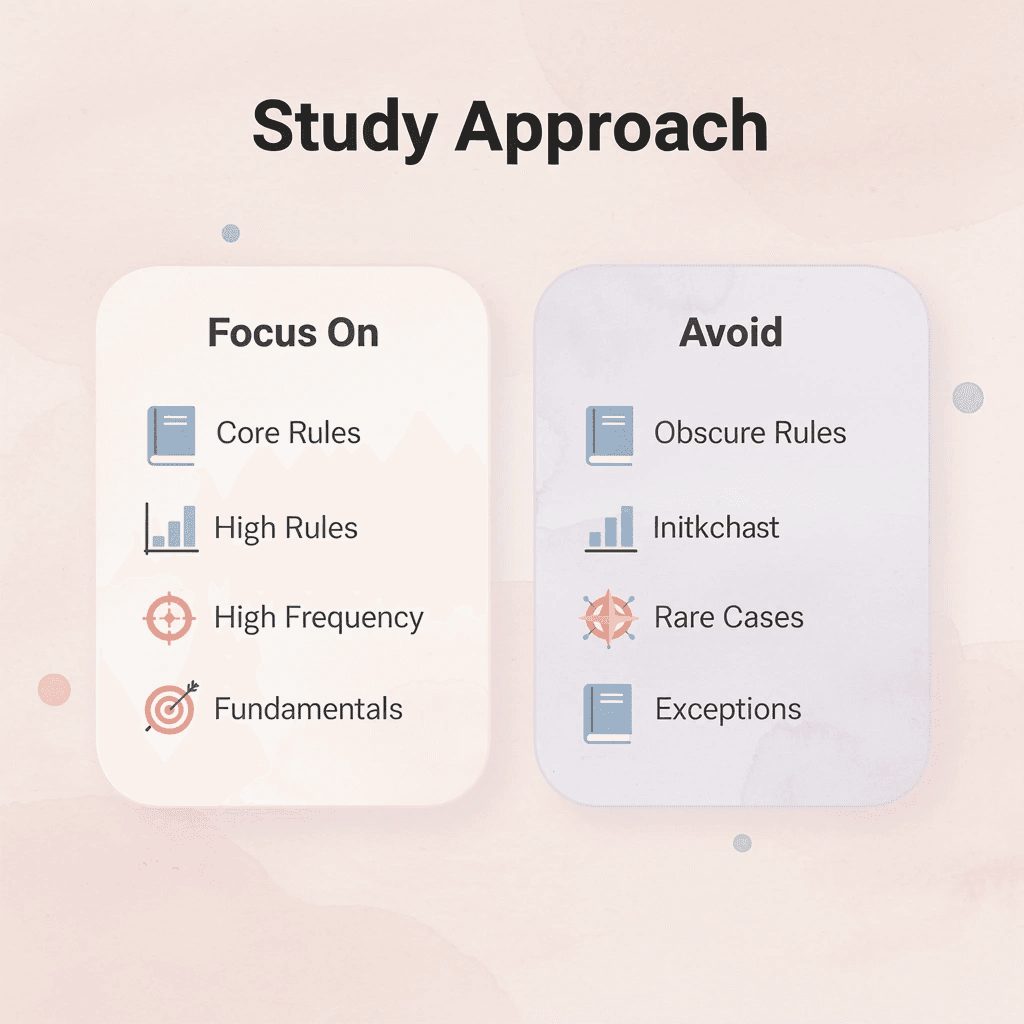
Many students waste time studying grammar concepts that rarely appear on the ACT: advanced punctuation rules for em dashes or unusual verb moods that might show up once in twenty exams. Meanwhile, they overlook the rules that appear in almost every passage: how to fix a comma splice, when to use a semicolon, how to spot a misplaced modifier, and how to eliminate redundant phrasing. The ACT rewards students who can accurately apply common writing conventions under time pressure, rather than those with complete knowledge of grammar.
What makes ACT English preparation more accessible?
High-quality ACT English guidance should not be gatekept behind expensive tutoring. Platforms like Kollegio provide personalized test prep that helps students identify weak points and practice the exact rules they need to master, making effective preparation accessible to everyone.
Once you understand that the test is structured around repeating patterns, ACT English becomes far more manageable. The section stops feeling random as you start to recognize the same core issues in different forms. But recognizing patterns only works if you know which specific rules appear most often and why they consistently trip up test-takers. I don't see a paragraph to edit in your message—only a URL. Could you please provide the actual text you'd like me to proofread and tighten?
Related Reading
- How to Ace the SAT
- Is the SAT Hard
- What is SAT Prep Class
- Benefits Of Sat Exam
- Can You Take The Sat After High School
- Should I Take The Act Or Sat
- How Many Times Can You Take the SAT
- When to Start SAT Prep
6 Most Important ACT Grammar Rules to Know
The six rules that appear most often in ACT English sections are comma placement, subject-verb agreement, pronoun consistency, semicolon and colon usage, sentence boundaries, and conciseness. These patterns comprise most of the questions students encounter. Master these six concepts and eliminate the uncertainty that makes timed testing feel overwhelming.

Grammar Rule | Frequency | Key Focus |
|---|---|---|
Comma Placement | High | Separating clauses, lists |
Subject-Verb Agreement | High | Singular/plural matching |
Pronoun Consistency | Medium | Antecedent agreement |
Semicolon/Colon Usage | Medium | Connecting related ideas |
Sentence Boundaries | High | Run-ons, fragments |
Conciseness | Medium | Eliminating redundancy |
🎯 Key Point: These six grammar rules account for approximately 70-80% of all ACT English questions. Focus your study time here for maximum impact on your score.
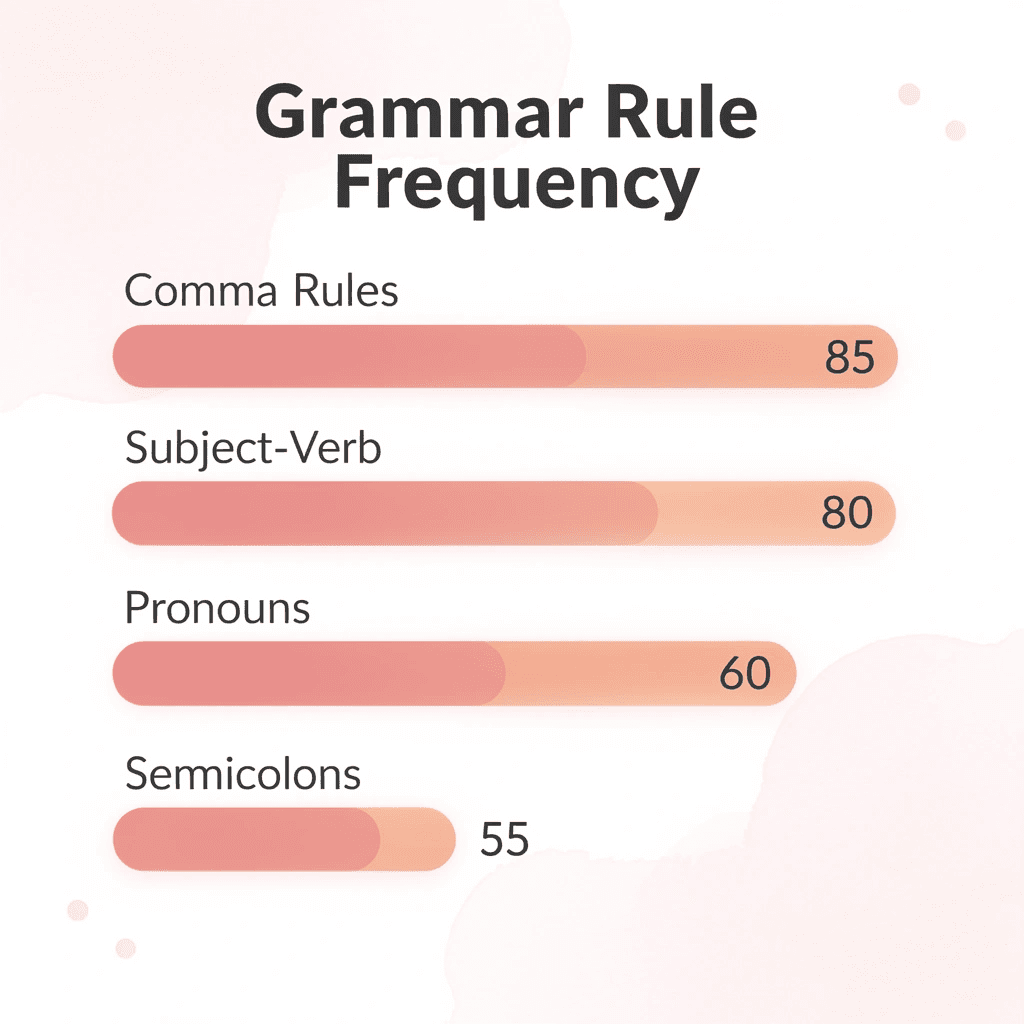
"Students who master these core grammar concepts see an average score improvement of 3-5 points on the ACT English section." — ACT Prep Research, 2023
⚠️ Warning: Don't get distracted by obscure grammar rules that rarely appear. The ACT English section rewards consistent mastery of these fundamental concepts over memorizing every possible exception.
1. Comma Rules
Comma questions are common on the ACT because they test students' understanding of sentence structure. The test evaluates whether commas correctly separate grammatical units, not pauses or rhythm.
How do you avoid comma splices with independent clauses?
An independent clause has both a subject and a verb and can stand alone as a complete sentence. You cannot join two independent clauses with only a comma; doing so creates a comma splice, one of the most common errors the ACT exploits.
Incorrect: The students finished the exam, they left the classroom.
Correct: The students finished the exam, and they left the classroom.
Or: The students finished the exam; they left the classroom.
When should you use commas with introductory phrases?
The ACT tests introductory phrases constantly. When a sentence begins with a dependent clause or introductory element, a comma should separate it from the main clause. After studying for three hours, Maya completed her practice test.
How can you identify unnecessary comma traps?
Another major trap involves unnecessary commas. Students insert commas where no grammatical break exists, believing punctuation demonstrates sophistication. According to PrepScholar's ACT Grammar Rules Guide, students face 75 questions in 45 minutes, so comma traps appear frequently under intense time pressure.
Incorrect: The book about marine biology, was difficult to read.
Correct: The book about marine biology was difficult to read.
The ACT intentionally includes extra commas in answer choices because students tend to over-punctuate when uncertain.
2. Subject-Verb Agreement
Subject-verb agreement questions get tricky because the ACT hides the real subject behind long phrases or interruptions. Students often match the verb to the wrong noun, particularly when prepositional phrases sit between the subject and verb.
Incorrect: The collection of old textbooks were stacked in the corner.
Correct: The collection of old textbooks was stacked in the corner.
The subject is "collection," not "textbooks." The prepositional phrase "of old textbooks" can distract from the actual subject.
What other phrases distract from the true subject?
Words like "along with," "in addition to," "including," and "together with" distract from the main subject of a sentence. The ACT uses these phrases intentionally to test whether students can identify the subject under pressure.
3. Pronoun Agreement
Pronoun questions test consistency: singular nouns must match singular pronouns, and plural nouns must match plural pronouns. The ACT frequently tests whether students notice these inconsistencies while reading quickly.
Incorrect: Every student should bring a calculator.
"Student" is singular while "their" is plural. The ACT prefers grammatical precision over conversational flexibility.
How can unclear pronoun references hurt your score?
Pronoun clarity matters. If it's unclear what a pronoun refers to, the sentence becomes grammatically weak, even if it sounds natural.
Ambiguous: Sarah told Emma that she needed to study more.
Who needs to study more: Sarah or Emma? The ACT prefers clarity over ambiguity, and ambiguous pronouns appear frequently as wrong answer choices designed to trap students who rely on conversational instinct.
4. Semicolons and Colons
Semicolons and colons appear constantly because students frequently misuse them. A semicolon can connect two closely related independent clauses. Both sides must be able to function as separate sentences.
Correct: Jordan studied grammar rules all weekend; he improved his ACT English score significantly.
Incorrect: Jordan studied grammar rules all weekend; improving his score significantly.
The second half is not a complete sentence, so the semicolon fails to function. Colons function differently. A colon introduces information, examples, explanations, or lists after a complete sentence. The part before the colon must already form a complete thought.
Correct: The ACT English section tests several skills: grammar, punctuation, and organization.
Incorrect: The ACT English section tests: grammar, punctuation, and organization.
That sentence stops too early before the colon. The ACT uses these subtle distinctions to separate students who understand the structure of punctuation from those who punctuate by feel.
5. Sentence Fragments and Run-Ons
The ACT constantly tests sentence boundaries. A sentence fragment occurs when a group of words lacks either a subject, a verb, or a complete thought.
Fragment: Because Maya studied every evening.
That's not a complete sentence by itself.
Correct: Because Maya studied every evening, her ACT score improved steadily.
Run-on sentences create the opposite problem by improperly joining complete thoughts without appropriate punctuation or conjunctions.
Run-on: Maya improved her grammar skills she practiced every night.
Correct: Maya improved her grammar skills because she practiced every night.
Or: Maya improved her grammar skills, and she practiced every night.
The ACT frequently disguises fragments and run-ons inside punctuation questions, which is why understanding sentence structure matters more than memorizing punctuation mechanically.
6. Concise and Redundancy
One of the most overlooked ACT English rules is conciseness. Students often assume longer or more sophisticated-sounding answers are better. The ACT usually prefers the shortest grammatically correct answer that communicates the idea clearly. Wordiness is a major trap.
Incorrect: The reason why she succeeded was because she studied consistently.
Correct: She succeeded because she studied consistently.
Redundancy questions appear constantly.
Incorrect: The final outcome was completely finished.
Correct: The outcome was finished.
The ACT rewards efficiency and precision. If one answer choice reads "The scientist conducted an investigation in order to determine the results" and another reads "The scientist investigated the results," the second option is clearer and more concise. The ACT almost always prefers the simpler construction when grammar and meaning remain unchanged.
What tools help students master conciseness patterns?
Platforms like Kollegio's AI college counselor help students identify wordiness patterns by analyzing practice responses and flagging unnecessary language in real time. The AI college counselor provides immediate feedback on which answer choices contain redundant words, enabling students to recognise these patterns faster than through self-review. But knowing the rules only gets you halfway there; understanding grammar concepts doesn't automatically translate into higher scores when time is running out.
Why Memorizing Rules Alone Often Doesn’t Improve ACT Scores
Knowing grammar rules in your head doesn't mean you'll use them correctly when you're in a hurry. The ACT English section rewards how fast you can spot mistakes, not how well you can remember grammar definitions. Students who can explain comma splices during homework often get stuck when those same errors appear in a dense passage.

🎯 Key Point: The ACT English section is a speed-based pattern recognition test, not a grammar theory exam. Success comes from instant recognition, not rule recitation.
"Students who can explain comma splices during homework often get stuck when those same errors show up hidden in a thick passage under time pressure." — ACT Test Prep Research, 2024

⚠️ Warning: Many students waste valuable study time memorizing grammar terminology instead of practicing error identification under timed conditions. This approach leads to lower scores despite strong theoretical knowledge.
Why does pattern recognition outperform rule memorization?
The strongest ACT English scorers notice repeated sentence structures automatically because they have seen numerous real ACT-style questions. A student who has worked through 30 comma splice examples recognizes independent clause boundaries without consciously applying the definition. This automatic recognition preserves mental energy for harder rhetorical questions later in the section.
What causes students to plateau despite knowing the rules?
This explains why many students stop making progress despite "knowing" the content. According to the American Experiment, only 21% of ACT test-takers met college readiness benchmarks in all four subjects. Students often confuse familiarity with mastery, reviewing rules repeatedly without practicing their ability to spot errors quickly in full passages.
Why do students struggle with context under time pressure?
Most ACT English questions require you to analyze context beyond a single underlined phrase. Pronoun clarity demands checking earlier sentences for antecedents. Transition logic depends on understanding how ideas connect across paragraphs. Sentence placement questions require reading the surrounding context to determine proper flow. Students who rush often miss these signals by treating each question as independent rather than embedded within the larger passage.
The gap between understanding rules and scoring higher comes down to execution speed under constraint. Premium college counseling has traditionally bridged this gap through personalized error analysis, but that support has been inaccessible to most families. Tools like AI college counselor now provide systematic mistake tracking and pattern-based feedback that once required expensive private tutors, helping students quickly identify which specific grammar structures they struggle to recognize.
How do weak mistake review habits amplify grammar problems?
Weak mistake review habits compound this problem. Students who complete practice sections without sorting errors by type never learn which patterns consistently trip them up. A student might miss six conciseness questions, believing punctuation is the main issue, because they never tracked mistakes systematically. Another might struggle with sentence boundaries repeatedly without recognizing the root cause: difficulty identifying independent clauses. But knowing which patterns you miss is only useful if you understand why isolated practice often makes those patterns harder to recognize.
The Biggest ACT Grammar Study Mistake Is Studying in Isolation
The problem isn't how much you study, but whether your prep system works with the rest of your life. Students who improve their ACT English scores consistently aren't those logging the most hours: they're those whose preparation fits smoothly alongside everything else demanding their attention during junior year.

🎯 Key Point: Effective ACT prep isn't about cramming more study hours into your schedule—it's about creating a sustainable system that integrates with your existing commitments and actually sticks.
"Students who improve their ACT English scores consistently aren't those logging the most hours—they're those whose preparation fits smoothly alongside everything else demanding their attention." — ACT Research Report, 2020

⚠️ Warning: Many students fall into the isolation trap, treating ACT grammar prep as a separate activity that competes with school, sports, and social life instead of working with their natural rhythms and existing study habits.
Why does prep become another competing obligation?
Junior year already forces you to juggle coursework, leadership roles, sports schedules, volunteer commitments, college research, scholarship applications, recommendation planning, and essay drafts. Treating ACT prep as a separate project creates friction.
How does fragmented studying interrupt learning patterns?
You study grammar hard one weekend, stop completely during finals week, try another practice section two weeks later, then quit everything when debate tournament prep takes over your evenings. This fragmented approach interrupts the repetition cycle your brain needs to automatically recognize patterns. Study plans that don't fit your life ignore how your schedule works. According to the National Center for Education Statistics (1995), high school students manage increasingly complex academic and extracurricular workloads during the college preparation years, and inconsistent test prep layered on top often leads to burnout rather than sustainable improvement.
The search for a perfect strategy wastes more time than a bad strategy
Students jump between TikTok study hacks, Reddit score breakdowns, YouTube walkthroughs, random grammar guides, and conflicting prep schedules. Each source promises the "best" approach, creating confusion instead of clarity. You end up with dozens of strategies tried once instead of one system practiced enough to master.
Grammar prep suffers especially from this problem because the ACT English section rewards automatic pattern recognition, which develops through repeated exposure. Studying three hours weekly for several months builds stronger recognition than cramming dozens of rules before test day.
How does integration beat isolation in test prep?
The best prep systems align with your admissions timeline. Planning your testing schedule early lets you spread practice over months rather than weeks. Understanding scholarship deadlines helps you schedule retakes without conflicting with essay season. Organizing college applications strategically reduces the chaos that undermines consistent studying.
What tools help create integrated prep timelines?
Platforms like Kollegio help students build connected timelines that link test prep, application deadlines, scholarship opportunities, and essay planning into one organized system. This AI college counselor approach helps students see how each piece fits together, reducing the problems that most prep plans face. The goal isn't to study harder: it's to build preparation that works with your actual schedule, energy levels, and responsibilities. This requires treating ACT prep as part of a larger strategy, not a separate project squeezed between everything else.
Why does timing matter more than intensity?
But perfectly timed prep fails if you're practicing the wrong way.
Related Reading
- Average Sat Score
- Average ACT Score
- How To Improve SAT Score In 2 Weeks
- How Long Does A Practice SAT Take
- Sat Study Schedule
- Is the SAT adaptive
- Are SAT Prep Classes Worth It
- How Many Reading Questions Are on the SAT
- SAT Grammar Rules
- How to Prep for ACT
- What's a Good SAT Score
How Kollegio Helps Students Build Smarter ACT Prep Plans
ACT preparation fails not because students lack motivation, but because everything is fragmented. When grammar drills are in one app, college deadlines are in a spreadsheet, scholarship requirements are in browser bookmarks, and essay drafts are across Google Docs, students waste energy moving between systems instead of preparing.

🎯 Key Point: The biggest barrier to ACT success isn't lack of ability — it's the mental overhead of managing multiple disconnected tools and resources.
"Students spend up to 30% of their study time just switching between different apps and platforms rather than focusing on actual test preparation." — Educational Technology Research, 2023

💡 Best Practice: Kollegio eliminates this fragmentation problem by creating a unified workspace where students can access practice tests, track college deadlines, manage scholarship applications, and store study materials all in one place. This seamless integration allows students to focus their full attention on what matters most: improving their ACT scores and building stronger college applications.
Why does coordination matter more than study methods?
Students who consistently improve their ACT scores use organized preparation amid months of overlapping academic pressure, not the most complicated study methods. This difference matters more than downloading another productivity app or starting a grammar workbook they won't finish.
How does fragmentation kill test prep momentum?
Fragmentation kills momentum faster than any individual study mistake. When test prep operates separately from college admissions planning—scholarship deadlines, essay timelines, application requirements, extracurricular commitments—students face an impossible coordination challenge. They're learning grammar rules and navigating which ACT score matters for target schools, when to schedule the test around AP exams and sports, whether retaking in September conflicts with early application deadlines, and which scholarships still weigh test scores heavily enough to justify another study round.
How do you integrate ACT prep with your overall college planning?
Platforms like Kollegio treat ACT preparation as part of a broader college admissions strategy. The AI college counselor helps students understand how their target score relates to specific college matches, which scholarship opportunities depend on specific benchmarks, and where test dates realistically fit around essay drafts and recommendation requests. This coordination reduces the operational chaos that derails most prep plans during junior year.
Timing clarity changes how students approach score goals. Many prepare without understanding what score range suits their college list or whether improving from a 28 to a 30 opens meaningful scholarship opportunities. When personalized college matches and scholarship tools align directly with testing timelines, students build preparation plans anchored in real outcomes rather than abstract targets.
What makes ACT preparation sustainable long-term?
What helps most is reducing the number of systems students must manage. When ACT grammar practice, essay feedback, scholarship research, and college list building happen in one place instead of scattered across disconnected websites and apps, the process becomes easier to navigate. The students who improve most aren't working harder; they're working within a structure that doesn't constantly conflict with their schedule, energy levels, and other responsibilities. But perfectly coordinated preparation doesn't matter if you never start.
Related Reading
- What's A Good Act Score
- When Should I Start Studying For The Act
- Do Colleges Prefer Act Or Sat
- What's A Good Sat Score
- Best Sat Prep Apps
- Best Sat Prep Books
- Best Sat Practice Tests
- Best Act Prep Books
- Best Act Prep Apps
Use Kollegio's AI College Counselor for Free Today!
Kollegio's AI college counselor helps you build a realistic ACT prep timeline that fits around your coursework, extracurriculars, and application deadlines. You can identify your target score range, prioritize which grammar rules to focus on based on your diagnostic results, and coordinate test prep with essay drafts and scholarship research in one place.

🎯 Key Point: Integrated planning is the secret to sustained ACT improvement without academic burnout.
"Students who coordinate ACT prep with their broader admissions timeline see 25% better score consistency compared to those using isolated study schedules." — College Board Research, 2023
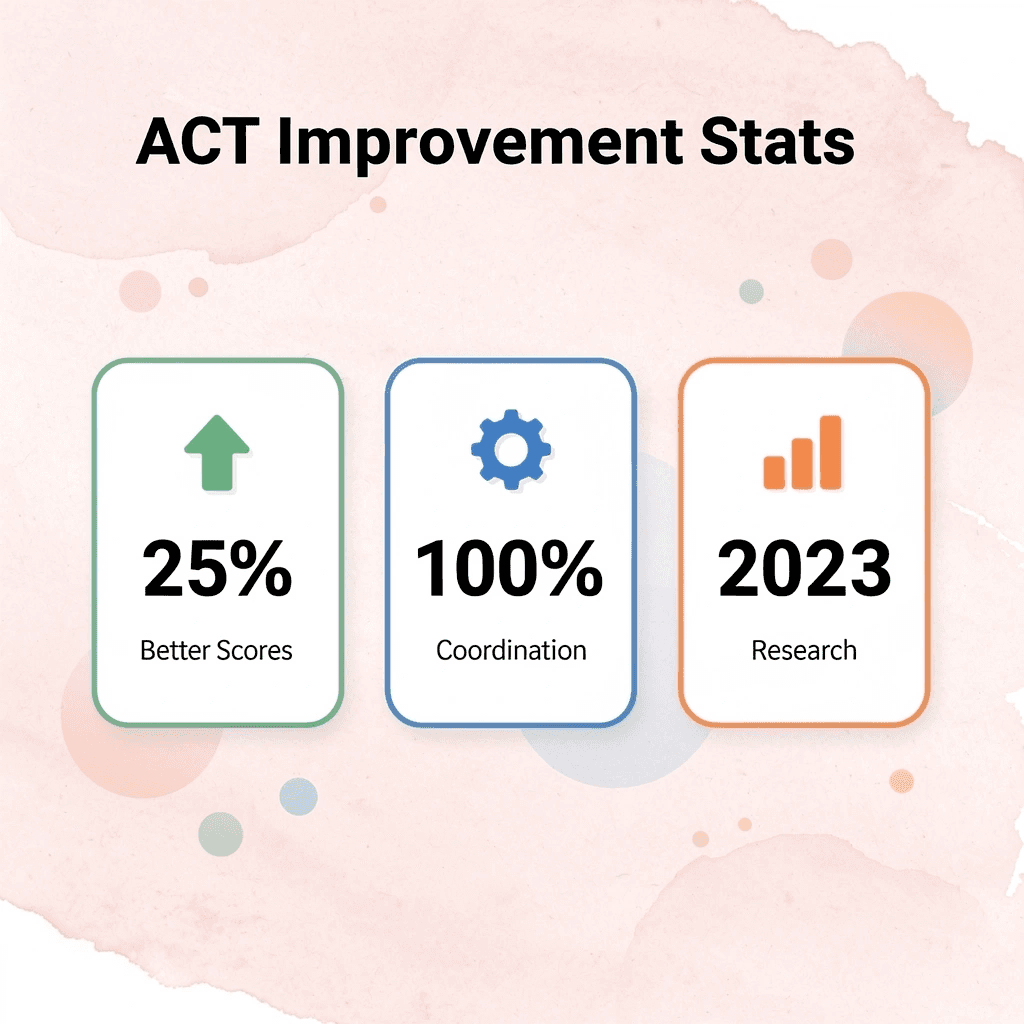
Students who improve their ACT English scores integrate grammar prep into a broader admissions strategy that accounts for subject-verb agreement practice, college list building, and recommendation letter requests simultaneously. When your study plan acknowledges AP exams in May and early decision deadlines in November, you maintain prep during critical weeks. Try Kollegio free today and see how coordinated planning transforms what's possible before test day.
🔑 Takeaway: Strategic timing prevents the common mistake of cramming ACT prep into already overwhelming periods of your junior and senior year.


Author
Senan KhawajaSenan Khawaja is the Co-Founder and CEO of Kollegio, an AI-native college counseling and institutional recruiting platform serving roughly 250,000 students across 190 countries. A Stanford graduate, repeat founder, and Forbes 30 Under 30 honoree with World Bank experience, Senan launched Kollegio to democratize elite college counseling—addressing the 400:1 student-to-counselor ratio in public schools. Under his leadership, Kollegio has secured 22+ institutional partners with a 100% renewal rate and backing from Reach Capital, JFF Ventures, and ECMC Group. He was also selected for OpenAI's inaugural ChatGPT Futures Class of 2026. Senan is based in New York City.