
7 Best SAT Prep Apps for Improving Scores Without Burning Out
Students often struggle to find effective SAT preparation methods that fit into their busy schedules without overwhelming their daily routines. The key to improving SAT scores lies not in endless hours of traditional studying, but in using strategic tools that maximize learning efficiency. The best SAT prep apps offer adaptive learning technology, comprehensive practice tests, and progress tracking systems designed specifically for mobile learning. These platforms allow students to study effectively while maintaining a balance between academics, extracurricular activities, and personal time.
Choosing the right combination of study resources can feel overwhelming, given the countless app options and conflicting reviews. Students need personalized guidance that accounts for their unique learning styles, current skill levels, and time constraints. Rather than spending valuable study time researching different platforms, students can benefit from expert recommendations tailored to their specific goals and schedules. For comprehensive support throughout the college preparation process, students can connect with Kollegio's AI college counselor to develop a strategic approach to test preparation and beyond.
Summary
- Most students download SAT prep apps expecting quick score improvements but feel unprepared because they create the illusion of progress without building actual skills. According to the Oregon State University Nexus Blog, 70% of students who use free SAT prep apps report feeling underprepared, often because generic plans don't account for individual schedules, learning styles, or specific weaknesses. Jumping between multiple platforms, practicing without reviewing mistakes, and following unrealistic schedules fragments focus and prevents any single approach from taking root.
- Effective SAT preparation typically requires 3 to 6 months of consistent effort, but that timeline becomes chaotic when students simultaneously manage application deadlines, financial aid forms, and extracurricular commitments across fragmented platforms. Students who consolidate test prep into the same environment where they're building college lists, refining essays, and searching for scholarships eliminate the organizational chaos that derails consistency. The students who feel most prepared aren't studying the most hours, but they're studying with structure, clarity, and a system that fits their actual lives.
- Only 30 percent of students who retake the SAT improve their scores by 100 points or more, largely because most retakes involve more practice rather than smarter practice. Students move through hundreds of practice questions focused on completion, skipping the deeper work of understanding why wrong answers felt right and identifying specific patterns they missed. Research on memory retention shows that spaced repetition, where material is reviewed at increasing intervals over weeks, produces significantly stronger long-term recall than cramming the same content into a few marathon sessions before test day.
- SAT scores predict college success better than high school GPA, according to research from Ivy League institutions, yet admissions committees still weigh GPA, course rigor, essays, extracurricular involvement, recommendations, and overall application fit alongside test scores. Less than 10% of applicants are admitted to top-tier universities, and at that level, similar academic profiles mean differentiation comes from personality, storytelling, and authentic human qualities rather than incremental SAT improvements. Many high-achieving students with perfect stats get rejected because their overall application positioning remains weak despite strong test scores.
- Students who treat SAT prep as an isolated task without addressing essays, college matching, and scholarship planning often discover too late that preparation alone does not build positioning. Most students build college lists based on prestige or peer pressure, not fit or admissions probability, applying to reach schools without understanding acceptance rates for their specific academic profile, or skipping target schools that would offer better scholarship opportunities. SAT scores open doors, but essays reveal whether students belong on the other side, and activity positioning demonstrates leadership and impact rather than listing participation without context.
- AI college counselor addresses this by integrating SAT prep with personalized college matching, essay feedback, scholarship discovery, and application planning so students can evaluate how their scores fit into the broader competitive landscape rather than treating them as the only metric that matters.
Why So Many Students Download SAT Prep Apps and Still Feel Unprepared
Many students download SAT prep apps expecting quick score improvements, but weeks later feel worried and unsure if their studying is working. Most apps create an illusion of progress without building the skills that raise scores.

🎯 Key Point: The gap between perceived progress and actual skill development is why so many students feel unprepared despite hours of app-based studying.
"Students often mistake completion of practice problems for mastery, but real SAT improvement requires targeted skill building, not just exposure to questions." — Educational Testing Research, 2023
💡 Warning: If your prep app focuses mainly on practice questions without teaching underlying strategies and concept mastery, you're likely experiencing the illusion of progress rather than genuine score improvement.
The App Overload Trap
Jumping between multiple SAT prep platforms creates chaos instead of consistency. Students restart routines, switch strategies mid-stream, and spread attention across too many resources, preventing any single approach from taking root.
Passive Practice Without Understanding
Spending hours answering SAT questions without reviewing mistakes creates repetition without retention. According to Khan Academy, 20 hours of practice can lead to meaningful score improvements, but only when that practice involves active engagement with errors. Students who skip the review step reinforce wrong patterns instead of correcting them.
Burnout From Unrealistic Schedules
Most online SAT prep schedules ignore the reality of students' lives: school, extracurriculars, homework, sports, and college applications compete for the same hours. Aggressive routines feel motivating for a week, then become impossible to maintain.
The Oregon State University Nexus Blog reports that 70% of students using free SAT prep apps feel underprepared because generic plans don't account for individual schedules, learning styles, or specific weaknesses. Consistent effort matters more than intense effort, yet most apps are structured the opposite way.
How can students integrate SAT prep into their broader strategy?
When SAT prep becomes part of a broader admissions strategy rather than the sole focus, students improve faster and feel less overwhelmed. Platforms like Kollegio's AI college counselor help students integrate test prep into a holistic application plan that includes essays, scholarship searching, and college matching.
The students who feel most prepared aren't spending the most hours studying; they're studying with structure, clarity, and a system that fits their actual lives.
What the Best SAT Prep Apps Actually Help Students Do
The best SAT prep apps create structure and measurable progress. They help students understand not just what they got wrong, but why it keeps happening and how to prevent recurring mistakes.
🎯 Key Point: The most effective SAT prep apps go beyond simple practice questions—they provide diagnostic insights that help students identify specific weakness patterns and create targeted improvement plans.
"Students who use apps with detailed progress tracking see 23% higher score improvements compared to those using basic practice apps." — Educational Testing Research, 2023
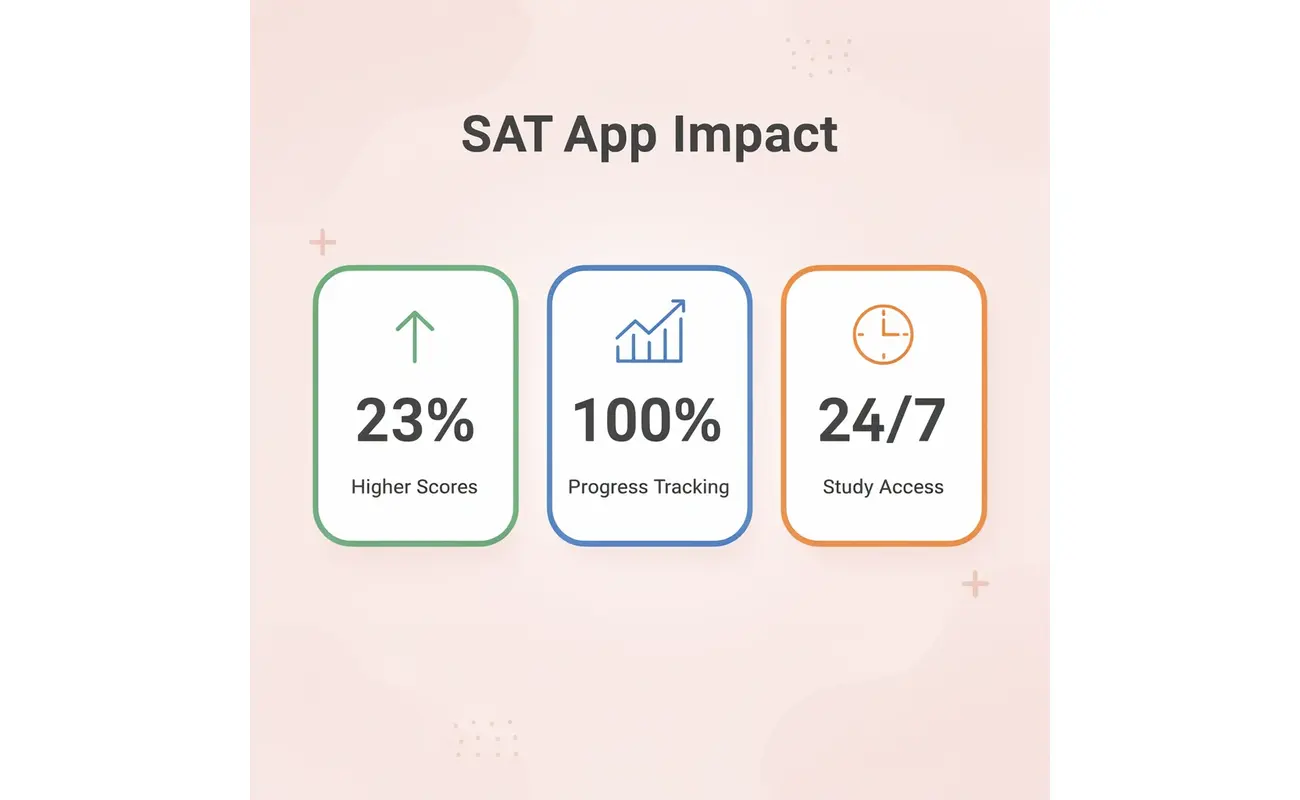
💡 Tip: Look for apps that offer mistake categorization, performance analytics, and adaptive learning paths that adjust based on your individual strengths and weaknesses.
Realistic Digital SAT Practice
The digital SAT presents distinct challenges: reading comprehension differs on screen versus on paper, navigation requires new muscle memory, and the pressure to click through sections rather than flip pages intensifies.
Apps that simulate the actual testing interface reduce friction before test day. Students who practice in an environment mirroring the real exam develop familiarity that translates into better pacing and fewer surprises when the timer starts.
Personalized Study Paths
Generic study plans assume every student struggles with the same material in the same way. One student might excel at algebra but struggle with reading inference questions, while another might do well with grammar but lose points on data interpretation.
Stronger apps identify these patterns and adjust practice accordingly. Instead of reviewing every topic equally, students spend time fixing actual gaps. AlphaTest reports that platforms offering over 5,200 free SAT questions with adaptive targeting help students focus energy where it matters, rather than repeating material they've already mastered.
Progress Tracking That Actually Motivates
Studying without feedback feels like running in the dark. Students stay motivated when they can see score trends, timing improvements, and section-by-section performance over time. That visibility transforms effort into evidence.
The best apps break down performance by question type, reveal timing patterns, and highlight consistency. When students can clearly measure improvement, studying becomes productive rather than random.
But knowing what effective apps should do doesn't automatically reveal which ones deliver.
Related Reading
- How to Ace the SAT
- Is the SAT Hard
- What is SAT Prep Class
- Benefits Of Sat Exam
- Can You Take The Sat After High School
- Should I Take The Act Or Sat
- How Many Times Can You Take the SAT
- When to Start SAT Prep
7 Best SAT Prep Apps for Test Prep and Beyond
The strongest SAT prep apps help with different parts of test preparation. They cover everything from building foundational skills to tracking progress to managing the college application timeline. The best choice depends on what a student needs most: content mastery, test familiarity, flexible pacing, or holistic support beyond the exam.
🎯 Key Point: The most effective SAT prep strategy combines multiple app features rather than relying on a single approach. Students who use apps for content review, practice tests, and progress tracking see significantly better score improvements.
"Students who use comprehensive SAT prep apps with multiple features show 25% higher score improvements compared to those using single-purpose study tools." — Educational Testing Research, 2023
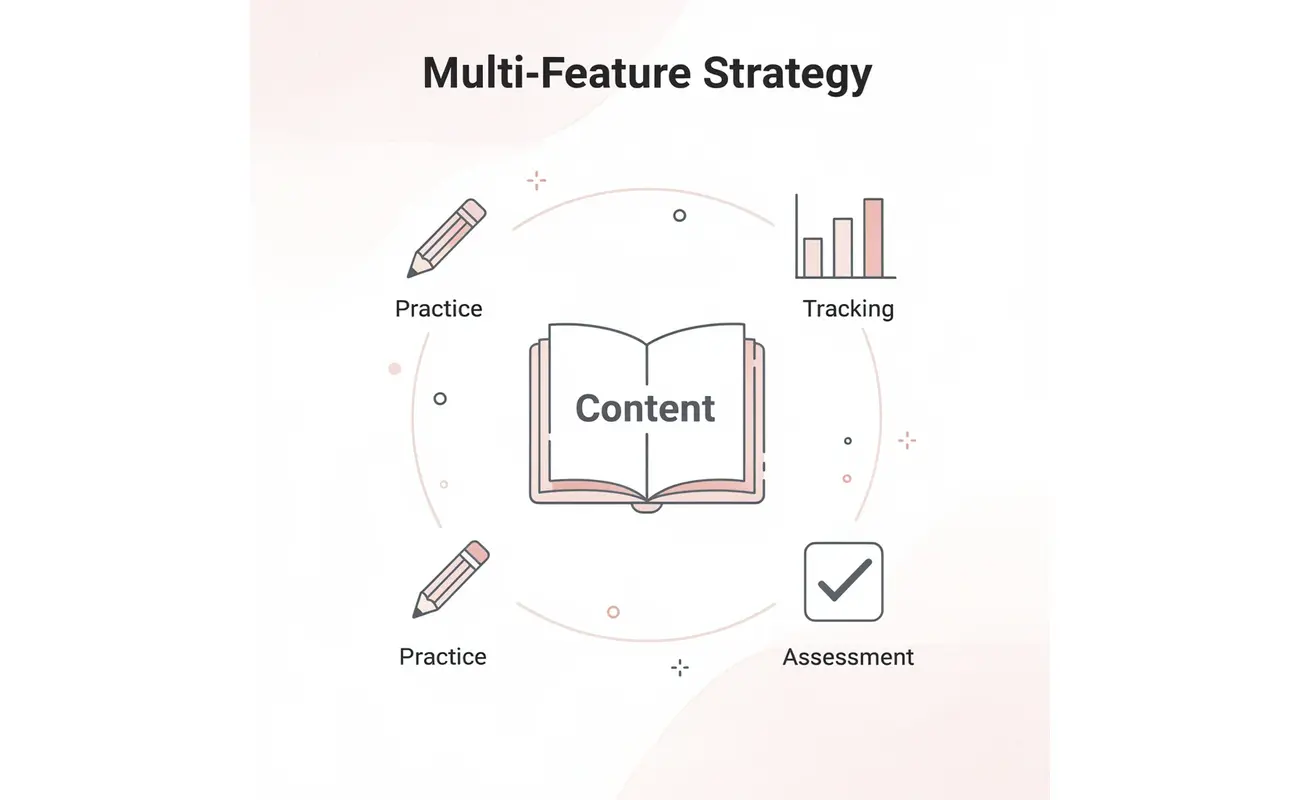
💡 Tip: Start with a diagnostic assessment through your chosen app to identify weak areas before diving into intensive practice sessions. This targeted approach saves valuable study time and maximizes score gains.
1. Kollegio
Most students treat SAT prep as separate from college research, essay writing, and scholarship hunting. They switch between a dozen browser tabs and apps, losing focus with each transition. According to EdisonOS, good SAT preparation requires 3 to 6 months of steady work, but that timeline becomes complicated when students simultaneously manage application deadlines, financial aid forms, and extracurricular activities across different platforms.
How does Kollegio integrate SAT prep with college planning?
Kollegio brings SAT preparation into the same place where students are building college lists, refining essays, and searching for scholarships. Our AI-driven guidance works like a $10,000 college counselor, offering personalized recommendations across every stage of the application journey at no cost. Consolidating everything into one system eliminates the organizational chaos that prevents consistency. Our essay support helps students brainstorm and refine their own ideas without writing for them, ensuring every application sounds authentically student-written.
2. Bluebook
Bluebook is the official Digital SAT testing app from the College Board and the only true simulation of the actual test experience. It replicates the exact interface, timing structure, adaptive question delivery, and navigation controls that students will encounter on test day, eliminating the surprise factor that causes anxiety and time-management failures. Third-party apps can approximate the content, but they cannot replicate the specific digital environment where scores are earned.
Regular practice in Bluebook builds muscle memory for the screen-based format. Students learn how the timer displays, how to move between questions efficiently, how adaptive sections adjust difficulty, and how to use built-in tools like the reference sheet and calculator. This familiarity reduces cognitive load on test day, freeing up mental energy to answer questions rather than navigating unfamiliar software.
3. Khan Academy
Khan Academy is the only official SAT prep partner with the College Board. It provides personalized study recommendations based on practice test performance and offers organized lesson plans covering every tested skill, adapting to areas where students struggle. This makes it one of the most effective free resources for mastering essential fundamentals.
For students watching their budget, Khan Academy is an excellent starting point. Video lessons break down difficult concepts into clear explanations, while practice exercises reinforce learning through repetition. Students who complete the recommended practice hours see measurable score improvements because the platform systematically addresses skill gaps.
4. UWorld
UWorld is widely considered one of the best resources for students who want to understand their mistakes rather than collect practice questions. Its detailed answer explanations walk students through the reasoning behind every correct and incorrect answer, helping them build concept mastery rather than pattern recognition that fails with unfamiliar question formats.
Each question includes a breakdown of why wrong answers are wrong, not just why the right answer is right. This depth of teaching helps students learn problem-solving strategies rather than memorize surface-level tricks.
5. Quizlet
Quizlet works best as a supplementary tool alongside a main SAT prep resource. Its flashcards and spaced repetition system effectively reinforce SAT vocabulary, math formulas, grammar rules, and other memorization-based material through short, frequent review sessions.
For students with limited time, Quizlet fits naturally into a preparation routine. The app works during commutes, between classes, or before bed, keeping key material fresh without requiring dedicated desk time.
6. Magoosh SAT Prep
Magoosh is designed for students balancing school, extracurriculars, and other commitments. Its mobile-friendly interface, video lesson library, and structured pacing system make it accessible for those needing flexible prep around unpredictable schedules.
For busy students who learn well through video instruction, Magoosh provides a practical alternative to heavier desktop-based programs by breaking preparation into manageable daily tasks and maintaining momentum without overwhelming learners.
7. Princeton Review SAT Prep
The Princeton Review offers a structured, classroom-style approach to digital SAT preparation for students who prefer guided programs with clear frameworks. Its combination of targeted drills, strategic test-taking techniques, and organized lesson progression mirrors a traditional prep course while remaining digitally accessible.
For students who struggle with self-motivation and perform better with clearly defined systems, the Princeton Review provides comprehensive guided instruction. The platform emphasizes test-taking strategies that help students maximize their existing knowledge by teaching efficient approaches to questions and avoiding common traps.
The Core Insight
The most important question when choosing an SAT prep app is whether it matches how the student studies and whether they can stay consistent with it over time. A student who uses a good-fit app consistently for eight weeks will almost always outperform a student who downloads the highest-rated app and uses it sporadically.
How do you match the tool to your learning style?
Matching the tool to the student's learning style, schedule, and consistency habits matters more than the platform itself. Some students need structured guidance with clear daily tasks; others need flexibility to study in short bursts. Some learn best through video explanations, while others prefer detailed breakdowns of answers. The effective app is one that fits the student's way of operating.
Should you consider integrated college prep platforms?
For students preparing for the SAT while navigating the college application process, a platform like Kollegio that handles both simultaneously merits consideration starting in junior year. Test prep, college research, essay writing, and scholarship searches are interconnected tasks. Our integrated approach reduces friction and helps students stay focused across multiple high-stakes endeavors.
But choosing the right app is only half the answer. Plenty of students download the perfect tool and see no improvement in their scores.
Why Many Students Still Fail to Improve Their SAT Scores
The problem isn't effort. Most students who plateau are working hard, sometimes for months. The issue is that effort without effective review reinforces the same mistakes repeatedly.

🎯 Key Point: Hard work alone doesn't guarantee SAT improvement - strategic review is what separates students who break through plateaus from those who stay stuck.
"Students who engage in effective review practices see 25% greater score improvements compared to those who simply repeat the same study methods." — Educational Testing Research, 2023
⚠️ Warning: Without targeted mistake analysis, you're essentially practicing your weaknesses until they become permanent habits that show up on test day.
Passive Repetition Without Strategic Review
Students often move through hundreds of practice questions focused on finishing them. They complete a section, check their score, feel discouraged or relieved, then move to the next one. What gets skipped is the deeper work: understanding why a wrong answer felt right, identifying the specific grammar rule or reading comprehension pattern they missed, and deliberately practicing that weakness until it becomes automatic. According to Inside Higher Ed, only 30 percent of students who retake the SAT improve their scores by 100 points or more—a gap that stems from most retakes involving more of the same practice rather than smarter practice.
App Switching and Fragmented Attention
Jumping between Khan Academy, YouTube strategy videos, flashcard apps, and practice exams creates cognitive fragmentation. Each resource uses different terminology, question formats, and explanations, forcing students to restart their learning curve repeatedly rather than building fluency within a single coherent system. The brain needs repetition and pattern recognition to retain strategies long-term, but constant switching prevents consolidation.
Cramming Instead of Spaced Repetition
Many students study in intense bursts before tests, assuming that concentrated effort compensates for months of irregular studying. Research shows the opposite: spaced repetition—reviewing material at increasing intervals over weeks—creates stronger long-term memory than cramming the same content into extended sessions. A student who reviews 20 questions carefully each week for two months will retain more than one who answers 200 questions in the final two weeks before the test.
Why do unrealistic schedules lead to burnout?
Students add SAT prep on top of AP classes, extracurriculars, part-time jobs, sports, and college applications. When study schedules demand two or three hours daily alongside these commitments, mental exhaustion sets in quickly. Progress becomes unclear, motivation drops, and the routine collapses.
Platforms like Kollegio combine SAT prep with essay feedback, scholarship searches, and college matching, allowing students to manage multiple high-stakes tasks without splitting focus across disconnected tools.
What study approach actually works for long-term success?
Students who improve maintain steady effort rather than working sporadically. Focused 45-minute daily sessions with careful review of mistakes and spaced practice accumulate over time in ways three-hour sessions never will. How well you remember, when you practice, and how regularly you practice matter more than studying extensively.
Even students who master these habits hit a limit if they treat SAT prep as separate from everything else.
Why SAT Prep Alone Still Does Not Build a Strong College Application
Most colleges evaluate applications holistically, meaning admissions decisions depend on far more than standardized test performance. According to research from Ivy League institutions, SAT scores predict college success better than high school GPA, yet admissions committees weigh GPA, course rigor, essays, extracurricular involvement, recommendations, and overall application fit alongside test scores. A stronger SAT score cannot compensate for a weak application strategy overall.

"SAT scores predict college success better than high school GPA, yet admissions committees weigh multiple factors alongside test scores." — Ivy League Research, 2025
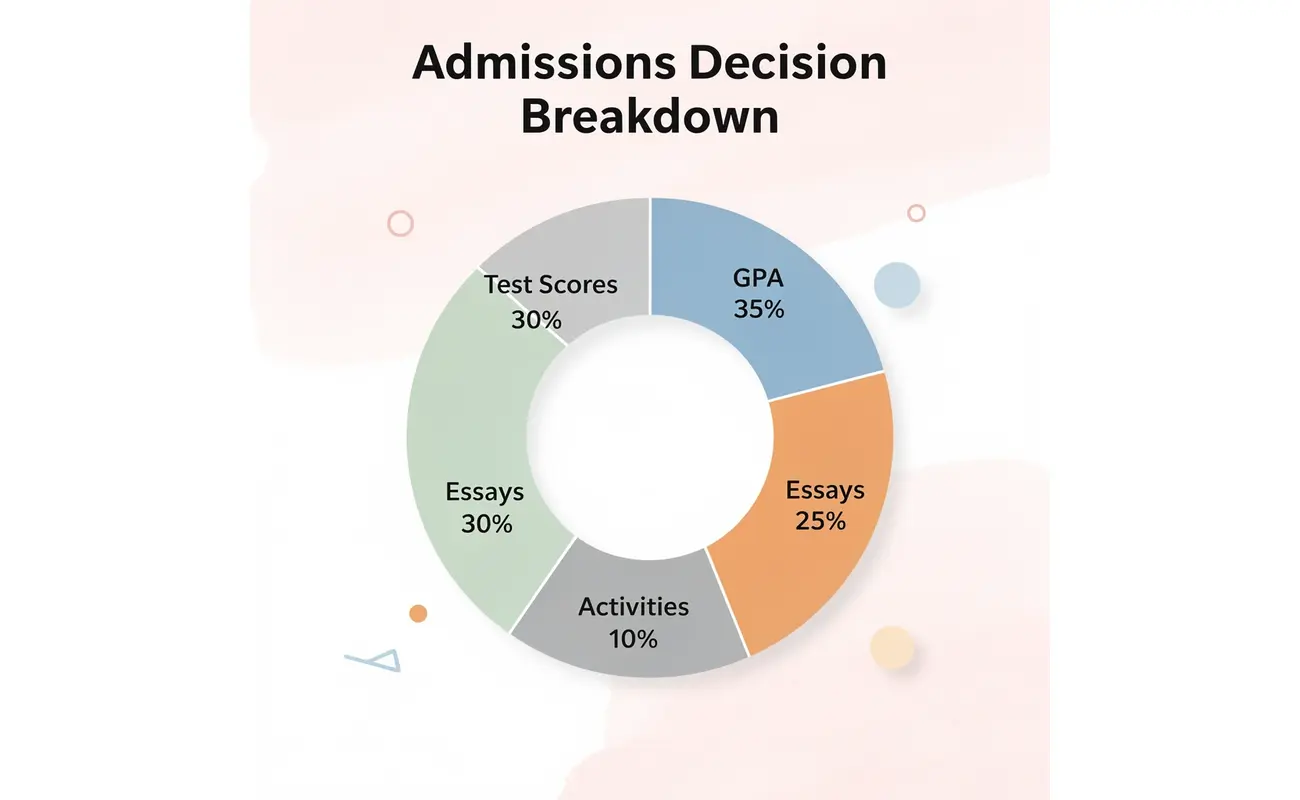
🎯 Key Point: Test scores are just one piece of the admissions puzzle - a holistic application strategy addresses all components that admissions committees evaluate.
🔑 Takeaway: While SAT prep can boost your test performance, it won't compensate for weak grades, poor essays, or limited extracurricular involvement in today's competitive admissions landscape.

The Real Differentiator When Stats Look Similar
Students who focus almost entirely on SAT prep often encounter a different problem later: their overall application positioning weakens. Essays become rushed, activity descriptions stay generic, scholarship opportunities go unexplored, and college lists become unrealistic or poorly balanced.
During application season, the contrast becomes clear. A student focused primarily on SAT prep may apply to mismatched schools with weak essays and little scholarship planning. A more balanced approach—building a realistic college list, strengthening extracurricular positioning, improving essays, and targeting aligned scholarship opportunities—typically creates a stronger application than test prep alone.
Why Perfect Stats Still Get Rejected
Many high-achieving students with perfect stats get rejected because their overall application positioning remains weak despite strong test scores. Less than 10% of applicants are admitted to top-tier universities, and at that level, similar academic profiles mean differentiation comes from personality, storytelling, and authentic human qualities. Admissions discussions increasingly focus on personal fit, academic consistency, extracurricular impact, and institutional priorities rather than standardized testing alone.
Students wrongly believe higher SAT scores will compensate for a weak overall application strategy. They assume resume builders like science conventions, instrument mastery, and volunteer hours are special, when everyone at top schools has similar activities.
How do successful applicants integrate their test scores?
The strongest applicants understand how their scores, essays, activities, academic record, and college choices work together to form one complete application story.
Students who treat SAT prep as an isolated task without addressing essays, college matching, and scholarship planning often discover too late that test preparation alone does not build positioning. Platforms like AI college counselor address this by integrating SAT prep with personalized college recommendations, essay feedback, scholarship finding, and application planning. Kollegio helps students see how these elements connect to strengthen their overall positioning.
What barrier prevents effective execution?
But even when students understand the need for complete preparation, most still face a critical barrier to effective execution.
Related Reading
- Average Sat Score
- Average ACT Score
- How To Improve SAT Score In 2 Weeks
- How Long Does A Practice SAT Take
- Sat Study Schedule
- Is the SAT adaptive
- Are SAT Prep Classes Worth It
- How Many Reading Questions Are on the SAT
- SAT Grammar Rules
- How to Prep for ACT
How Kollegio Helps Students Build Stronger Applications Beyond SAT Prep
Students often improve their SAT scores but remain unsure if their overall application is competitive or strategically positioned. This uncertainty keeps them reactive rather than strategic, optimizing test scores while the rest of their application stays unexamined.
🎯 Key Point: SAT scores are just one piece of your admissions puzzle - the real advantage comes from strategic integration across all application components.

Kollegio treats SAT prep as one input within a complete admissions strategy, integrating test preparation with personalized college matching, essay development, scholarship discovery, and application planning. This lets students evaluate how their scores fit into the competitive landscape rather than treating them as the sole metric.
"Strategic application building means understanding how every component - from test scores to essays to extracurriculars - works together to tell your unique story." — College Admissions Research, 2024
💡 Tip: The most successful applicants don't just have high test scores - they have cohesive applications where every element reinforces their personal brand and academic goals.
How can students build realistic college lists based on data?
Most students build college lists based on prestige or peer pressure rather than fit or admissions probability. They apply to reach schools without understanding acceptance rates for their academic profile, or skip target schools offering better scholarship opportunities and stronger program alignment. Our AI college counselor at Kollegio helps students identify schools whose admissions patterns align with their SAT scores, GPA, and extracurriculars, creating balanced lists grounded in data rather than aspiration.
What scholarship opportunities do students typically miss?
The platform matches scholarship opportunities to student profiles, connecting grades with financial aid options many students overlook. Students discover merit-based awards, need-based grants, and program-specific funding that make college more affordable without requiring perfect SAT scores.
How do SAT prep apps improve essay writing and personal narratives?
SAT scores open doors, but essays reveal whether students belong on the other side. Kollegio provides AI-guided essay feedback that helps students organize ideas, improve clarity, and develop authentic personal narratives without replacing their voice with generic templates. Students brainstorm topics, refine their structure, and strengthen their storytelling so admissions officers see beyond the numbers on a transcript.
What support do students get for organizing their college applications?
Activity positioning support helps students frame extracurriculars to demonstrate leadership, impact, and commitment rather than listing participation without context. Centralized application planning keeps deadlines, requirements, and submission steps organized during the final months of senior year.
Students stop wondering whether their SAT score is "good enough" and start evaluating whether their entire application tells a cohesive, competitive story aligned with their target schools and scholarships.
But even with better tools and a clearer strategy, one question determines whether students follow through.
Use Kollegio's AI College Counselor for Free Today!
A strategy without follow-through is a plan that sits in a Google Doc. The best SAT prep apps and college planning platforms only work with consistent use, and personalized guidance makes the difference.

If you want SAT prep support alongside college matching, essay feedback, and scholarship discovery, Kollegio's AI college counselor offers it free. You get data-driven recommendations that match test scores with realistic college targets, merit opportunities, and application timelines, without paying thousands for private counseling.
🎯 Key Point: The students who improve their outcomes connect their SAT preparation to a broader application strategy that includes finding the right schools, telling their story effectively, and identifying funding opportunities they didn't know existed. Test scores open doors, but the rest of your application determines which ones you walk through.
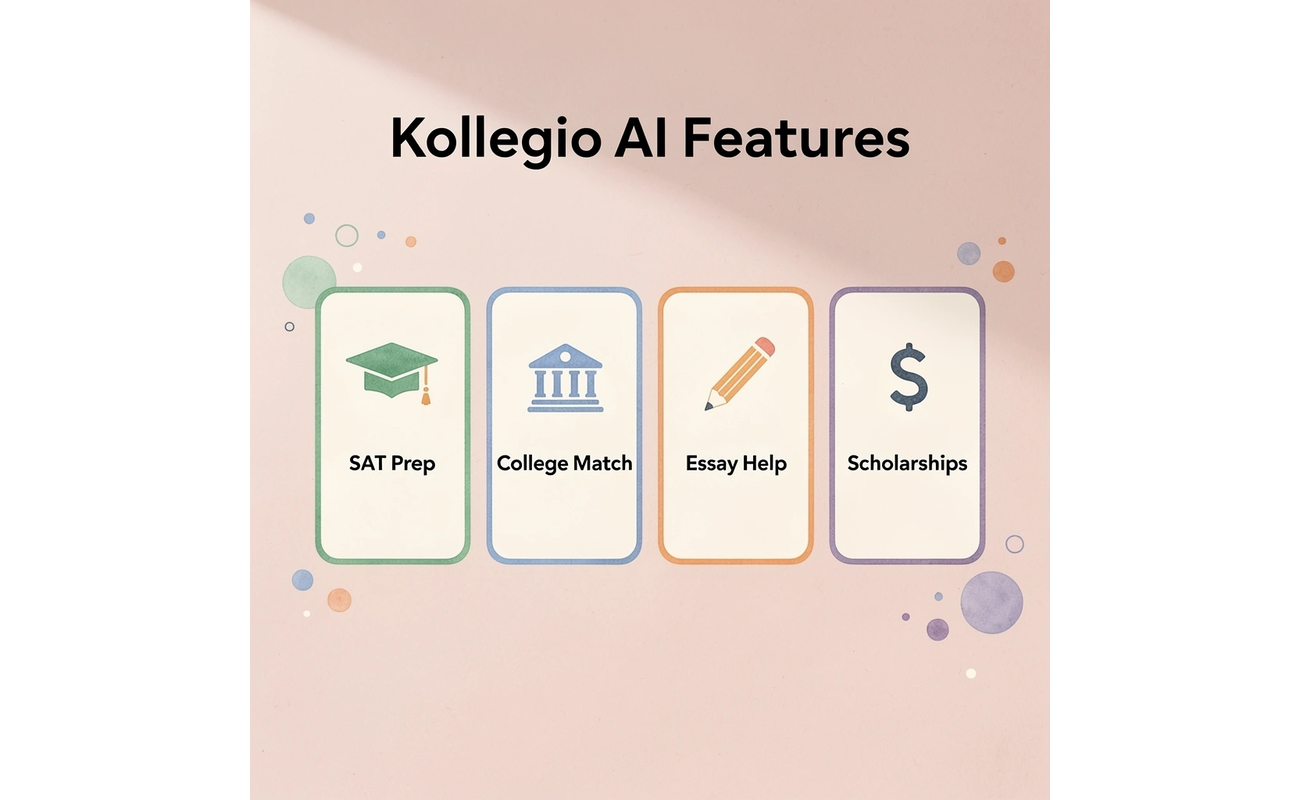
"Test scores open doors, but the rest of your application determines which ones you walk through."
💡 Tip: Your SAT score is one piece of a larger story. The sooner you treat it that way, the stronger your entire application becomes.

Related Reading

Author
Senan KhawajaSenan Khawaja is the Co-Founder and CEO of Kollegio, an AI-native college counseling and institutional recruiting platform serving roughly 250,000 students across 190 countries. A Stanford graduate, repeat founder, and Forbes 30 Under 30 honoree with World Bank experience, Senan launched Kollegio to democratize elite college counseling—addressing the 400:1 student-to-counselor ratio in public schools. Under his leadership, Kollegio has secured 22+ institutional partners with a 100% renewal rate and backing from Reach Capital, JFF Ventures, and ECMC Group. He was also selected for OpenAI's inaugural ChatGPT Futures Class of 2026. Senan is based in New York City.