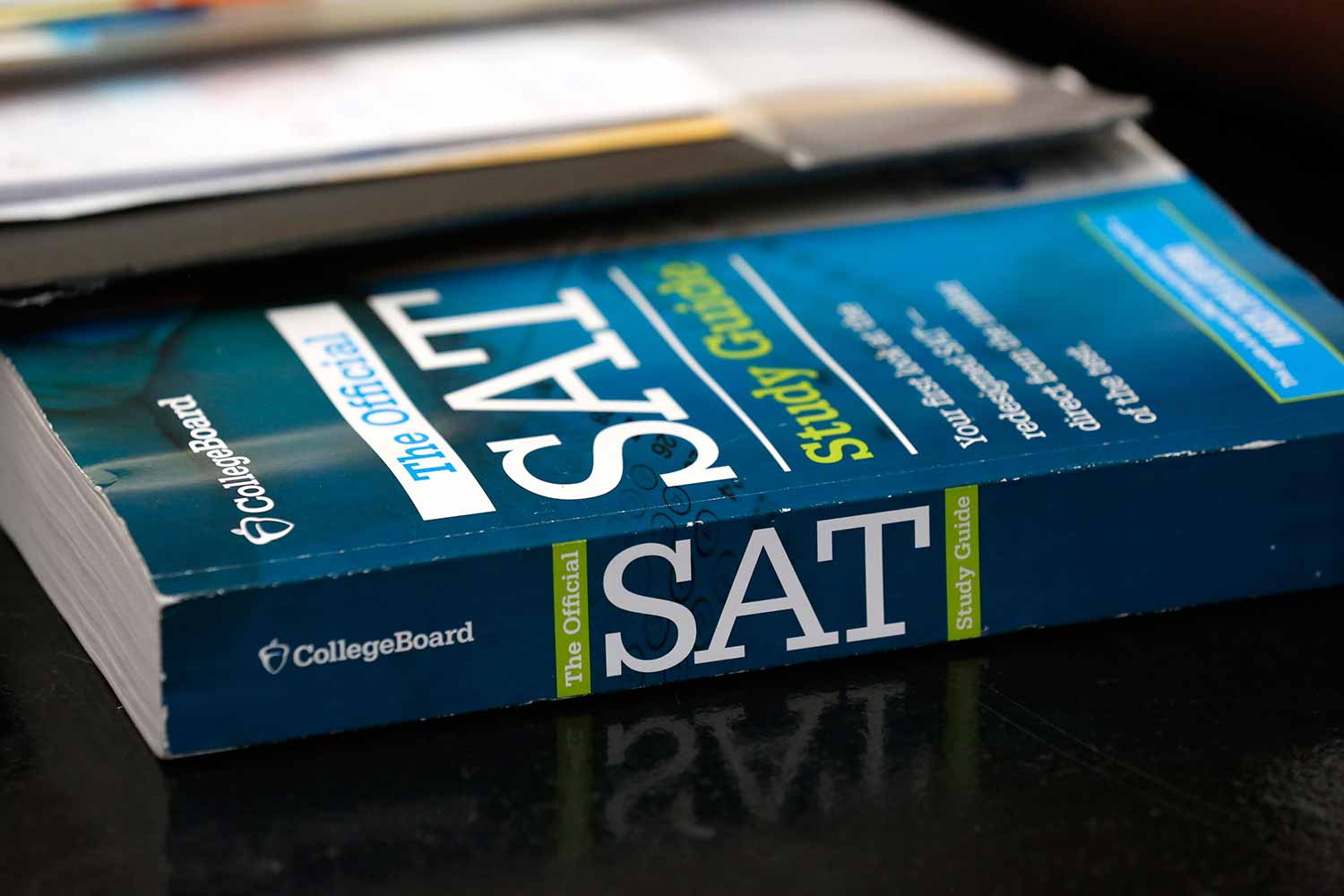
5 Best SAT Prep Books for Higher Scores and Less Burnout
The right SAT prep book can transform test preparation from overwhelming confusion into focused, strategic study sessions. With countless options available, students need materials that deliver proven strategies, realistic practice tests, and approaches that genuinely improve scores. The most effective prep books help students ace the SAT by breaking down complex concepts into manageable steps. Quality materials prevent burnout from ineffective cramming while building the skills needed for test-day success.
Choosing the best study materials represents just one element of comprehensive SAT preparation. Students benefit most when their prep book selection aligns with their individual learning style, target score goals, and specific weaknesses in their subject area. A personalized approach that matches the right resources to each student's needs creates more efficient study sessions and better outcomes than generic preparation methods. For students seeking this tailored guidance, Kollegio's AI college counselor provides customized roadmaps that recommend specific prep books and practice resources while managing stress levels throughout the preparation process.
Summary
- Students taking six or more practice exams score an average of 50 to 70 points higher than those with fewer attempts, according to Catalyst Test Prep. Most students never reach that threshold because they keep switching between resources instead of building consistency with a single system. The problem is not effort but treating every new book as a fresh start instead of deepening practice with the materials they already have.
- The SAT shifted to a fully digital, adaptive format in 2024, yet many prep books still reflect outdated paper-based structures with longer sections and different question distributions. Adaptive testing means the difficulty of your second module depends on how you performed in the first, which changes the pacing strategy entirely. A prep book designed for the old format may teach time management tactics that no longer apply or practice question sequences that don't mirror what students actually face on test day.
- College Board SAT benchmark data show that students often display uneven performance across SAT sections, which is why targeted prep resources can be more effective than relying on broad general reviews alone. One student might need intensive math support while another struggles primarily with reading comprehension under time pressure. The strongest SAT prep plans usually come from combining the right resources with a study system that matches how the student actually learns.
- The SAT predicts only about 10 percent of the variance in first-year college grades, according to Inside Higher Ed. Colleges evaluate multiple factors beyond standardized testing, including academic performance, essays, extracurricular involvement, and demonstrated interest, depending on the institution. Many students make the mistake of treating SAT prep as the entire admissions strategy instead of one part of a much larger process.
- Over 80% of colleges now use holistic admissions, which means essays, extracurriculars, and demonstrated interest matter as much as test scores. Students who treat SAT prep as the finish line often discover too late that their essays feel rushed, their college lists feel random, and their scholarship applications remain incomplete. The real advantage isn't just convenience but building applications where every piece actually fits together.
- Kollegio's AI college counselor addresses this by integrating SAT preparation with personalized college matching, scholarship discovery, essay feedback, and application timeline management, so test scores inform college fit recommendations, which shape essay direction, which connect to scholarship opportunities that align with your academic profile.
Why So Many Students Buy SAT Prep Books That Never Help
Students buy prep books expecting score improvement, but most fail because they treat SAT preparation like learning content instead of pattern recognition. The problem is practice spread without a system for tracking mistakes, building test stamina, or addressing specific question types that cost points.

🎯 Key Point: SAT success requires systematic pattern recognition training, not just content review. Most prep books fail to provide the structured approach needed for consistent score gains.
"The difference between effective SAT prep and wasted effort lies in treating the test as a pattern recognition challenge rather than a content memorization task."

⚠️ Warning: Random practice without mistake tracking and targeted improvement is the #1 reason why prep books don't deliver the score increases students expect.
What happens when students jump between multiple resources?
A student orders a highly rated prep book, commits to a study schedule, and works through chapters on grammar or algebra. After weeks of practice sessions, their test score barely moves. Frustration sets in, so they buy another book. Then a friend mentions a different resource, and suddenly they're juggling three books, YouTube, Khan Academy, and Quizlet without an organized plan.
How many practice tests do students actually need to see improvement?
According to Catalyst Test Prep, students who take six or more practice exams score an average of 50 to 70 points higher than those who take fewer. Most students fail to reach that threshold because they switch resources rather than commit to a single system.
What makes studying feel productive but ineffective?
Many students confuse reading about strategies with practicing them when time is limited. They highlight sections on elimination techniques or skim answer explanations without attempting test questions under pressure. Others take practice tests but skip the hardest part: reviewing every wrong answer to understand why they missed it and how to recognise similar questions next time. One student spent an hour solving ten questions from a prep book and scored only ten points higher after finishing the entire thing. That frustration stems from studying without feedback loops that connect effort to measurable improvement.
Why does the SAT reward pattern recognition over theory?
Passive studying feels productive because it fills time, but it does not build the reflexes needed to answer questions quickly and confidently during an actual test. The SAT rewards students who recognize question patterns instantly, not those who can explain concepts theoretically but freeze when the timer starts.
How does comparison pressure lead to SAT prep burnout?
Students constantly compare themselves to classmates using private tutors or expensive prep programs, creating worry about whether their approach is sufficient. According to the American Psychological Association, academic pressure and performance-related stress significantly affect student motivation, focus, and mental wellbeing. SAT preparation amplifies these feelings because students link test scores directly to college opportunities and future success.
This emotional weight makes it harder to stick to realistic study schedules. Students create ambitious plans that collapse under pressure from school, extracurriculars, and application deadlines. Missing a few sessions triggers guilt, making it harder to restart. Eventually, prep books sit half-finished on desks, and students blame themselves rather than recognizing their flawed study system.
What makes the difference between effective and ineffective prep books?
Most students who struggle with SAT prep lack an organized system that ties practice to personalized feedback, tracks specific weaknesses, and connects test preparation to a broader college strategy. Our AI college counselor creates a personalized SAT roadmap that identifies weak spots across the math, reading, and writing sections, recommends prep books aligned with target scores, and integrates test preparation into a complete college application plan to reduce stress and build confidence.
But buying the right prep book is only part of the answer. What separates books that help from books that collect dust?
What Makes an SAT Prep Book Effective
A good SAT prep book matches the student's skill level, learning preferences, and score goals while explaining how the digital SAT is organized. It provides realistic, timed practice, clarifies why wrong answers seem right, and builds study habits that last rather than overwhelming learners with unhelpful content.
🎯 Key Point: The most effective prep books focus on quality over quantity - they provide targeted practice that matches your current ability rather than cramming in every possible question type.
"Students who use prep materials aligned with their skill level show 23% higher score improvements compared to those using generic, one-size-fits-all approaches." — Educational Testing Research, 2023
💡 Best Practice: Look for books that offer diagnostic assessments to identify your specific weaknesses, then provide focused practice in those areas rather than a generic review of all topics.

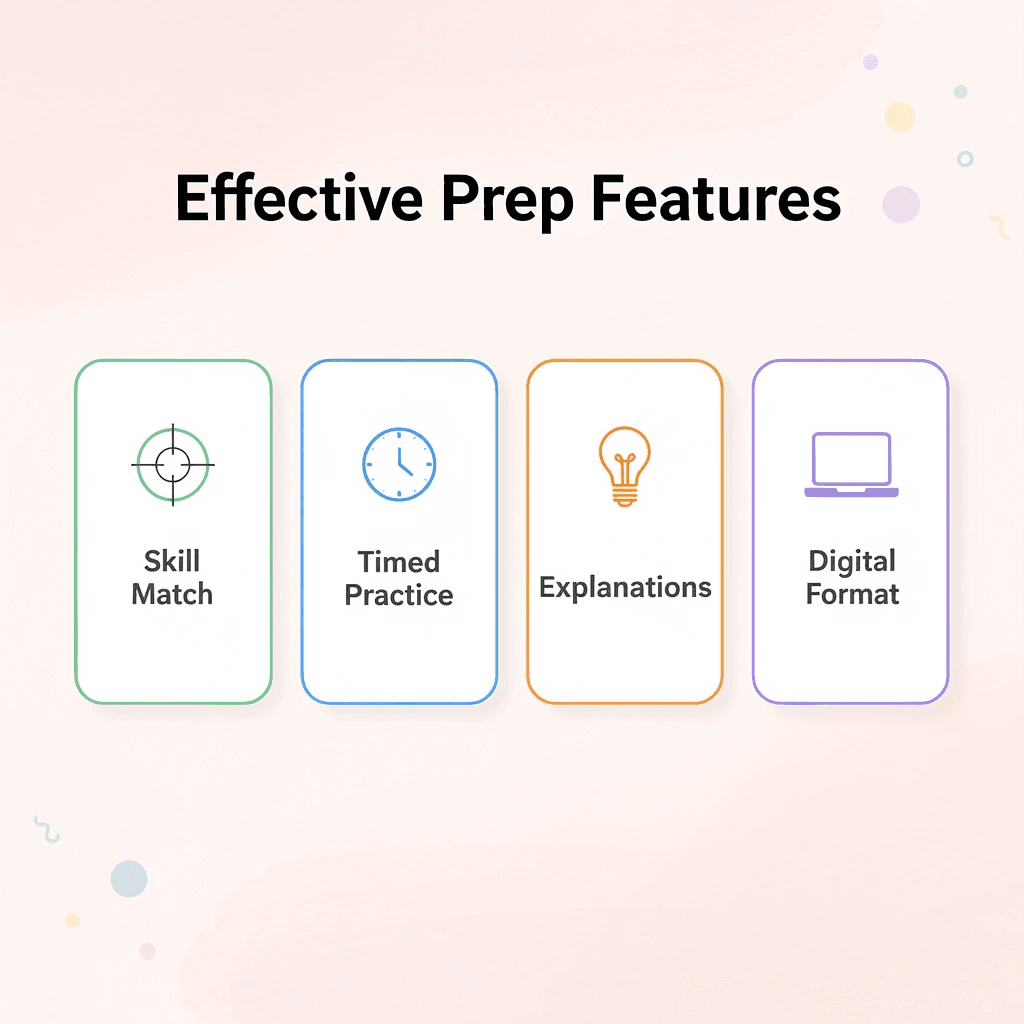
Effective Prep Book Features | Why It Matters |
|---|---|
Skill-level matching | Prevents overwhelm and builds confidence |
Realistic timed practice | Simulates actual test conditions |
Wrong answer explanations | Teaches you to avoid common traps |
Digital SAT format | Prepares you for the actual test experience |
Alignment with the Digital SAT Format
The SAT changed to a fully digital, adaptive format in 2024. Nearly 2 million students took the SAT in 2024, yet many prep books still show the old paper-based setup with longer sections and different question distributions. Adaptive testing means the difficulty of your second module depends on your performance in the first module, fundamentally changing your pacing strategy. A prep book designed for the old format may include outdated time-management tips or practice question sequences that don't match what students encounter on test day.
Practice Volume and Mental Stamina
Reading about test strategy feels productive, but it rarely translates to higher scores without repetition under realistic conditions. Students need at least 4-6 complete practice tests to build mental stamina for 3+ hour testing sessions, yet most prep books include only two or three full-length exams. Understanding a concept differs significantly from executing it correctly under pressure while tired. Students who treat practice tests as optional material rather than core training often plateau because they never develop the endurance required to maintain focus through an entire exam.
Answer Explanations That Teach Pattern Recognition
Getting the right answer alone doesn't teach you much. Good prep books explain why each wrong answer exists, what misconception it targets, and how to spot similar tricks in future questions. When a student misses a grammar question, they need to understand whether they missed a subject-verb agreement rule, misidentified the sentence structure, or fell for a distractor that sounded formal but broke standard English conventions. Books that only state "B is correct" without explaining the reasoning leave students uncertain whether they understood the concept or simply got lucky.
Why do students need different SAT prep approaches?
A student scoring 500 in maths needs different resources than one scoring 700. The lower-scoring student likely has gaps in algebra, geometry, or data analysis requiring basic review. The higher-scoring student understands the material but struggles with complex multi-step problems, time pressure, or careless mistakes under stress. Generic prep books waste time reviewing concepts some students have already mastered, while moving too quickly past topics others need. The best resources help students identify where they lose points, then provide focused practice in those areas.
How should students choose their SAT prep materials?
Most students pick SAT prep books the same way they choose study playlists: they grab what feels right and hope they stay consistent. But choosing the right book and using it well are two different challenges.
Related Reading
- How to Ace the SAT
- Is the SAT Hard
- What is SAT Prep Class
- Benefits Of Sat Exam
- Can You Take The Sat After High School
- Should I Take The Act Or Sat
- How Many Times Can You Take the SAT
- When to Start SAT Prep
5 Best SAT Prep Books
The best SAT prep book matches a student's weaknesses, confidence level, and study style rather than relying on ratings or page count. A resource that works for one student might feel overwhelming for another.

Here are five SAT prep books that stand out for different types of students.
💡 Tip: Choose your SAT prep book based on your specific weaknesses rather than popularity rankings. A targeted approach yields better results than generic study materials.
"The most effective SAT preparation comes from resources that align with individual learning styles and skill gaps, not from one-size-fits-all approaches." — College Board Research, 2023
🎯 Key Point: The right prep book should feel challenging but not overwhelming, matching your current skill level while providing clear pathways for improvement.

1. The Official Digital SAT Study Guide
This is the best starting point for students seeking realistic SAT practice. Because the book comes directly from the College Board, the questions closely match the wording, pacing, and structure of the actual digital SAT.
What makes this guide so realistic?
The biggest strength is realism: students practice with material made by the same organization that creates the exam itself. This is especially valuable for becoming familiar with adaptive question flow and official testing style.
What are the limitations of this guide?
The limitation is that explanations and strategy instruction are less detailed than those offered by third-party prep companies. Students needing deeper coaching on timing or test-taking strategy may want supplemental resources alongside it.
2. Princeton Review Digital SAT Premium Prep
This book works especially well for students who need structure and guided preparation. The Princeton Review approach focuses on pacing strategies, score-improvement systems, and organized study flow, breaking SAT prep into manageable sections rather than endless practice questions. The book combines content review with practical testing strategies, helping students feel less overwhelmed during timed practice. The structured approach creates momentum that keeps students moving forward, making it particularly useful for those who struggle with consistency or need accountability in their prep routine.
3. Barron's Digital SAT
Barron's is often recommended for students aiming for highly competitive SAT scores. The practice questions tend to be more difficult than the actual exam, particularly in maths and advanced reading sections. This greater difficulty helps stronger students build problem-solving endurance and sharpen timing under pressure. However, the difficulty can discourage students early in their prep journey, who may misinterpret lower practice test scores as failure rather than recognizing the intentionally demanding material. This book works best for students with a solid foundation who want to push their ceiling higher.
4. The College Panda SAT Math
For students struggling with SAT maths, this is one of the most targeted resources available. The explanations focus directly on the maths reasoning patterns students encounter repeatedly on the SAT. The book emphasizes efficient problem-solving and repeatable strategies over unnecessary theory. It works best as a supplement to broader SAT prep rather than a complete standalone solution. Students using official practice tests or full review guides often pair this book with their general prep workflow to strengthen weak math sections. The focused approach helps students identify where they lose points and build confidence in those specific areas.
5. Erica Meltzer's The Critical Reader
This book is especially valuable for students struggling with SAT reading comprehension, grammar rules, or verbal pacing. Erica Meltzer's approach breaks down questions in a detailed, organized way, teaching students to recognize patterns rather than rely on instinct.
Why do students need targeted SAT prep resources?
College Board SAT benchmark data show that students often perform unevenly across sections, which is why focused prep resources work better than broad general reviews. One student might need intensive math support while another struggles with reading comprehension under time pressure. No SAT prep book works equally well for every student. Some need realistic official practice, others need strategy coaching, harder drills, maths-specific support, or reading-focused structure.
How can you create an effective SAT prep plan?
The best SAT prep plans combine the right resources with a study system that matches how the student learns. Platforms like Kollegio help students understand how their SAT scores fit into their broader college strategy by providing personalized college recommendations, essay feedback, and scholarship matching at no cost.
The Biggest SAT Prep Book Mistakes Students Make
Students often confuse being busy with making progress. They spend hours using prep books but see little improvement in their scores because their study methods are ineffective. When they read the material, it feels familiar, but that feeling disappears when they must answer timed SAT questions independently.

🎯 Key Point: The biggest mistake is confusing time spent with effective practice. Many students fall into the trap of passive reading instead of active problem-solving.
"Students who engage in active practice see 25% higher score improvements compared to those who rely primarily on passive review methods." — Educational Testing Research, 2023

⚠️ Warning: If you're not regularly timing yourself and analyzing mistakes, you're likely wasting valuable prep time that could be spent on targeted improvement.
Passive studying undermines retention
Many students read answer explanations, highlight sections, or watch strategy breakdowns without actively practicing the skill afterward. The brain recognizes the information but never builds the muscle memory needed to execute under pressure. According to College Board SAT preparation guidance, students improve most effectively when they review errors carefully, identify recurring weaknesses, and practice targeted skills instead of repeatedly taking disconnected practice exams.
Resource hopping creates scattered learning
A student starts with one SAT guide, then switches to another recommended on YouTube or TikTok. Soon, they juggle multiple books, conflicting advice, and scattered practice methods without following any process consistently long enough to improve. This creates an illusion of productivity while weakening retention. Instead of building mastery, students repeatedly restart from scratch, never allowing any methodology to take root.
Section imbalance distorts progress
Some students spend months drilling SAT math because progress feels easier to measure there, while neglecting reading pace or grammar accuracy. Others over-study vocabulary or reading strategies while ignoring timing issues that harm their scores more. One student might own five prep books but lack a reliable review system or clear improvement strategy, surrounded by resources yet disconnected from a structured workflow to track mistakes, improve timing, review intentionally, and study consistently.
Why does burnout make SAT prep harder?
Burnout compounds the problem. Many students create unrealistic study schedules built around daily sessions lasting several hours while balancing school, extracurriculars, and college applications. Missing a few study days triggers guilt, making it harder to maintain consistent preparation. According to the American Psychological Association, prolonged academic stress reduces students' motivation, concentration, and information retention.
What makes focused studying more effective?
Students improve faster when they intentionally follow a focused study process with fewer resources, rather than constantly searching for the next prep book promising a shortcut. The most effective prep isn't about collecting materials: it's about building a system that turns practice into pattern recognition, mistakes into targeted improvement, and scattered effort into consistent momentum. Platforms like Kollegio help students understand how their SAT scores fit into their broader college strategy by providing personalized college recommendations, essay feedback, and scholarship matching at no cost. But even perfect SAT prep habits leave one critical gap unaddressed.
Related Reading
- Average Sat Score
- Average ACT Score
- How To Improve SAT Score In 2 Weeks
- How Long Does A Practice SAT Take
- Sat Study Schedule
- Is the SAT adaptive
- Are SAT Prep Classes Worth It
- How Many Reading Questions Are on the SAT
- SAT Grammar Rules
- How to Prep for ACT
Why SAT Scores Alone Do Not Build Strong College Applications
A strong SAT score helps, but many students treat SAT prep as their entire admissions strategy rather than one part of it, creating problems later in the application cycle.

Students spend months optimizing practice tests and chasing score increases, only to discover too late that admissions decisions depend heavily on essays, extracurricular activities, scholarships, college fit, and overall narrative. According to Inside Higher Ed, the SAT predicts only about 10 percent of the difference in first-year college grades. Colleges evaluate academic performance, essays, extracurricular involvement, and demonstrated interest alongside standardized testing.
"The SAT predicts only about 10 percent of the difference in first-year college grades." — Inside Higher Ed
🎯 Key Point: SAT scores are one piece of the admissions puzzle; essays, extracurriculars, and demonstrated interest carry significant weight.
⚠️ Warning: Students who focus exclusively on test prep often neglect the essay writing, activity development, and college research that make applications competitive.
What happens when students focus only on test prep?
The problem is that many students delay broader application planning in favor of almost entirely focusing on test preparation. SAT scores are measurable: students can track improvements on practice tests and feel progress. Essays, activity descriptions, scholarship searches, and college research feel less tangible, so they get pushed aside until deadlines become stressful.
That delay creates unnecessary pressure later. A student may improve their SAT score significantly while still scrambling to finalize a college list, search for scholarships, organize extracurricular activities, draft personal statements, and manage multiple application deadlines simultaneously. Months of focused SAT work didn't buy time for the rest of the application; it postponed dealing with everything else.
Why does coordination matter for college applications?
Strong college applications tell a consistent story. A student's essays, activities, academic interests, and college choices matter more when they align clearly rather than existing as disconnected pieces assembled at the last minute. Students who handle the process most effectively build a coordinated application strategy early enough that test prep, essays, scholarships, and college planning work together instead of becoming separate sources of stress.
Platforms like Kollegio help students coordinate these moving pieces by providing personalized college recommendations based on SAT scores, essay feedback that strengthens their narrative, and scholarship matching that reduces financial barriers. The platform consolidates what would otherwise scatter across spreadsheets, websites, and deadlines into a single workflow where test scores inform college fit, which shapes essay direction, which connects to scholarship opportunities. But knowing you need coordination differs from understanding what happens without it.
How Kollegio Helps Students Build Stronger Applications Beyond SAT
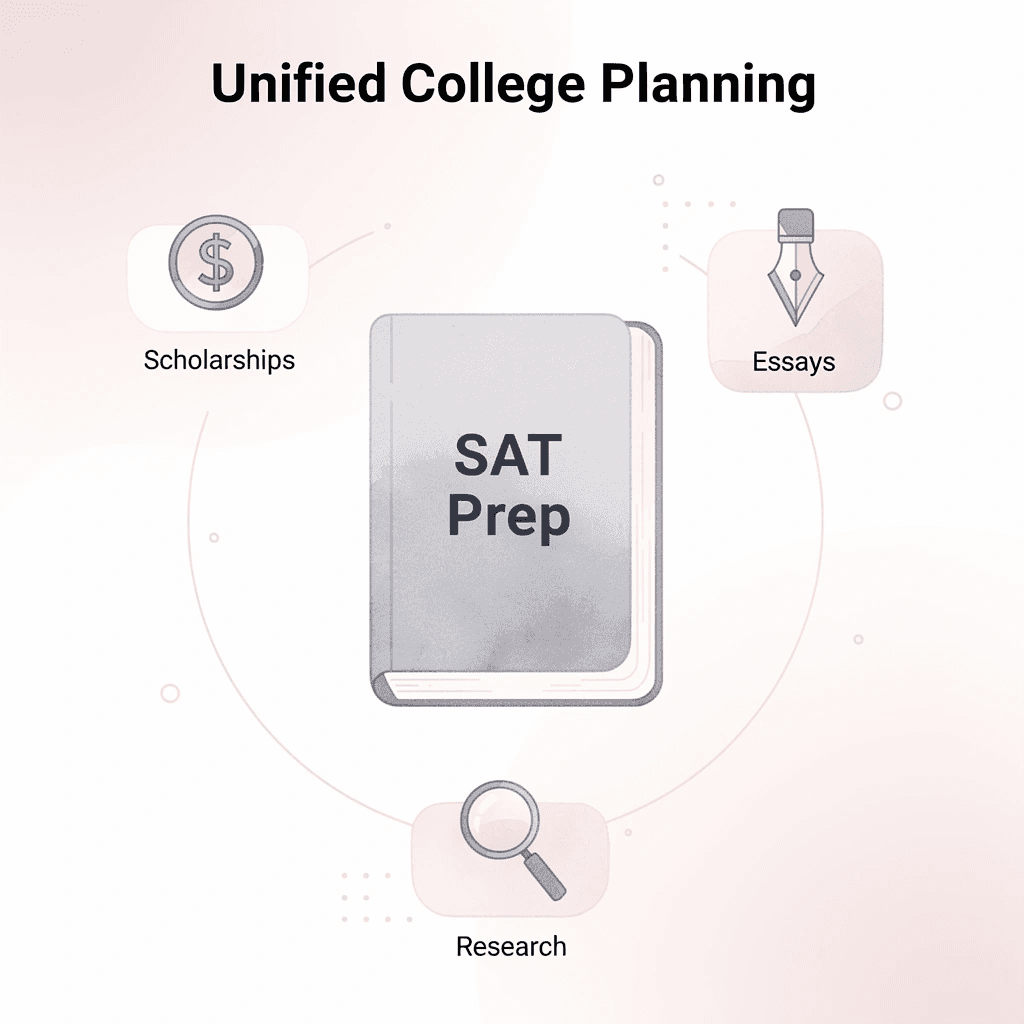
When SAT prep, essay development, and scholarship research are separate, students miss how they connect to each other. A strong test score paired with a generic essay and a mismatched college list fails to tell a compelling story about who you are or where you belong.
🎯 Key Point: Kollegio's integrated approach ensures that your test preparation, application essays, and college selection work together to create a cohesive narrative that admissions officers can't ignore.
"Students who take a holistic approach to college applications are 65% more likely to gain admission to their top-choice schools compared to those who treat each component separately." — College Board Research, 2023

🔑 Takeaway: The most successful applicants don't just have high scores – they have strategic alignment between every element of their application that demonstrates clear purpose and authentic fit.
Centralized Planning That Connects the Pieces
Kollegio views college admissions as a coordination challenge rather than a checklist. The platform integrates SAT preparation with personalized college matching, scholarship discovery, essay feedback, extracurricular guidance, and application timeline management. Test scores inform college fit recommendations, which shape essay direction, which connect to scholarship opportunities aligned with your academic profile. The workflow remains centralized rather than scattered across browser tabs and forgotten spreadsheets. For overwhelmed students, having everything organized in one place reduces mental overhead and context-switching. Each component reinforces the others, building a complete application strategy rather than a set of isolated tasks.
How does AI guidance preserve your authentic voice in applications?
Over 80% of colleges now use holistic admissions, meaning essays, extracurriculars, and demonstrated interest matter as much as test scores. Our AI college counselor helps you brainstorm, organize ideas, and provide feedback that strengthens your narrative while preserving your authentic voice. This matters because admissions officers quickly spot templated writing.
Why should you start college prep before finishing SAT prep?
Students who treat SAT prep as the finish line often find their essays rushed, college lists random, and scholarship applications incomplete. Our AI college counselor at Kollegio helps manage these moving parts earlier, reducing last-minute scrambles. The platform is free and trusted by over 200,000 students, making structured guidance accessible to families who can't afford expensive counseling.
What makes a cohesive application stand out to admissions officers?
The real advantage is building applications where every piece fits together: your SAT score supports your essays and your college list reflects what you're genuinely prepared to pursue. Admissions officers notice this coherence when deciding between candidates with similar test scores. But even with the right tools and preparation, one question lingers for most students.
Use Kollegio's AI College Counselor for Free Today!
SAT prep books give you scores, but they don't help you determine which colleges fit your profile, frame your extracurriculars, or when to start drafting essays. Admissions committees evaluate how all these pieces work together, yet most students treat them as separate tasks.

Platforms like Kollegio's AI college counselor let you organize your SAT prep alongside scholarship searches, essay drafts, and college research in one place, building a coordinated application from the start instead of scrambling to connect everything in senior fall. It's free, giving you strategic planning that used to cost thousands. You're preparing for the entire process early enough to refine what matters.
🎯 Key Point: Integrated college planning platforms eliminate the chaos of managing multiple application components separately, giving you the strategic advantage that wealthy families pay counselors thousands to provide.
"Strategic planning that used to cost thousands is now available for free, allowing students to build coordinated applications from the start rather than scrambling during senior year."
Start now while your SAT prep is fresh, and your schedule isn't buried under deadlines. The students who get into their top choices aren't the ones who scored highest—they're the ones who made every part of their application tell the same story.
🔑 Takeaway: Success in college admissions comes from narrative coherence across all application elements, not just high test scores. The best time to build that coherence is now, while you still have time to refine your story.
Related Reading

Author
Senan KhawajaSenan Khawaja is the Co-Founder and CEO of Kollegio, an AI-native college counseling and institutional recruiting platform serving roughly 250,000 students across 190 countries. A Stanford graduate, repeat founder, and Forbes 30 Under 30 honoree with World Bank experience, Senan launched Kollegio to democratize elite college counseling—addressing the 400:1 student-to-counselor ratio in public schools. Under his leadership, Kollegio has secured 22+ institutional partners with a 100% renewal rate and backing from Reach Capital, JFF Ventures, and ECMC Group. He was also selected for OpenAI's inaugural ChatGPT Futures Class of 2026. Senan is based in New York City.