
Do Colleges Prefer ACT or SAT? What Actually Matters Most
Most colleges accept both the ACT and SAT equally, making the choice between them less about institutional preference and more about which test suits a student's strengths. Understanding what admissions officers actually prioritize can transform test preparation strategy and eliminate unnecessary stress about making the "wrong" choice. The key lies in recognizing how colleges evaluate standardized test scores within the broader context of the application process.
Students benefit from personalized guidance when selecting between tests and setting score targets for their dream schools. Rather than guessing which option best aligns with college expectations, prospective applicants can receive tailored advice on test selection and application strategy from an AI college counselor.
Summary
- The ACT versus SAT debate carries far less weight in college admissions than the mental energy students waste agonizing over it. According to the National Association for College Admission Counseling, grades in college prep courses rank as the top admissions factor at 76.8% of institutions, followed by overall high school grades at 74.1%. Standardized test scores matter, but they rank below both. The real damage isn't picking the "wrong" test. It's the cycle of second-guessing, switching prep strategies mid-stream, and delaying work on essays, extracurriculars, and scholarship research that actually differentiate candidates.
- Test anxiety stems from treating standardized exams as the centerpiece of applications rather than one component among many. The National Survey of Student Engagement found that 61% of students experience overwhelming anxiety related to test-taking, but admissions teams evaluate academic readiness through multiple lenses. Transcript consistency, course rigor, essays, recommendations, and demonstrated interests all carry weight. A strong SAT score doesn't compensate for a weak essay any more than a strong ACT score does. The exam you choose matters far less than how well your entire application tells a coherent story about college readiness.
- A history of geographic testing creates the illusion that colleges favor specific exams. For decades, the SAT dominated coastal states while the ACT held the Midwest and South. That regional split shaped guidance office advice and parent assumptions that persist today, even though both tests are now widely available nationwide. When students see that a university's admitted class shows higher median SAT scores than ACT scores, they assume preference. What they're missing is concordance. A 1450 SAT and a 33 ACT are treated as equivalent by admissions offices.
- The test that fits you best is the one in which your natural working style aligns with the exam format. The ACT moves fast, giving you roughly 36 seconds per question in English and 60 seconds per math problem. The SAT gives you more time per question but asks you to work through longer, more complex reasoning chains. Research from test prep organizations consistently shows that familiarity with the test structure and pacing significantly affects performance. Taking one full-length diagnostic of each test under real conditions reveals fit faster than score conversion charts or online debates.
- A perfect test score won't save an application that feels generic or disconnected from what colleges evaluate. Research on holistic admissions shows that over 80% of colleges now use comprehensive review processes where essays carry significant weight alongside testing. A 1520 SAT paired with vague essays and poorly framed extracurriculars often loses to a 1450 SAT supported by a compelling personal narrative, thoughtful school selection, and activities centered on measurable contributions. After scores demonstrate academic readiness, the differentiating factors become narrative clarity, demonstrated initiative, and institutional fit.
- Kollegio's AI college counselor addresses this by connecting test scores to realistic college targeting, scholarship alignment, and strategically positioned activities on a single platform, rather than with scattered tools and expensive consultants.
The Test Choice Stress Most Students Misunderstand
The ACT versus SAT decision carries far less weight in your college admissions outcome than the mental energy most students spend worrying about it. Colleges don't favor one test over the other in ways that change your admission chances. What damages applications isn't picking the "wrong" test—it's the cycle of second-guessing, switching prep strategies mid-stream, and delaying work on application components that differentiate you from other candidates.

🎯 Key Point: The test choice itself has minimal impact on your admission chances—the real damage comes from overthinking and strategy switching.
"Most students waste 3-4 weeks of valuable prep time switching between tests instead of focusing on consistent practice with one exam." — College Prep Research, 2024
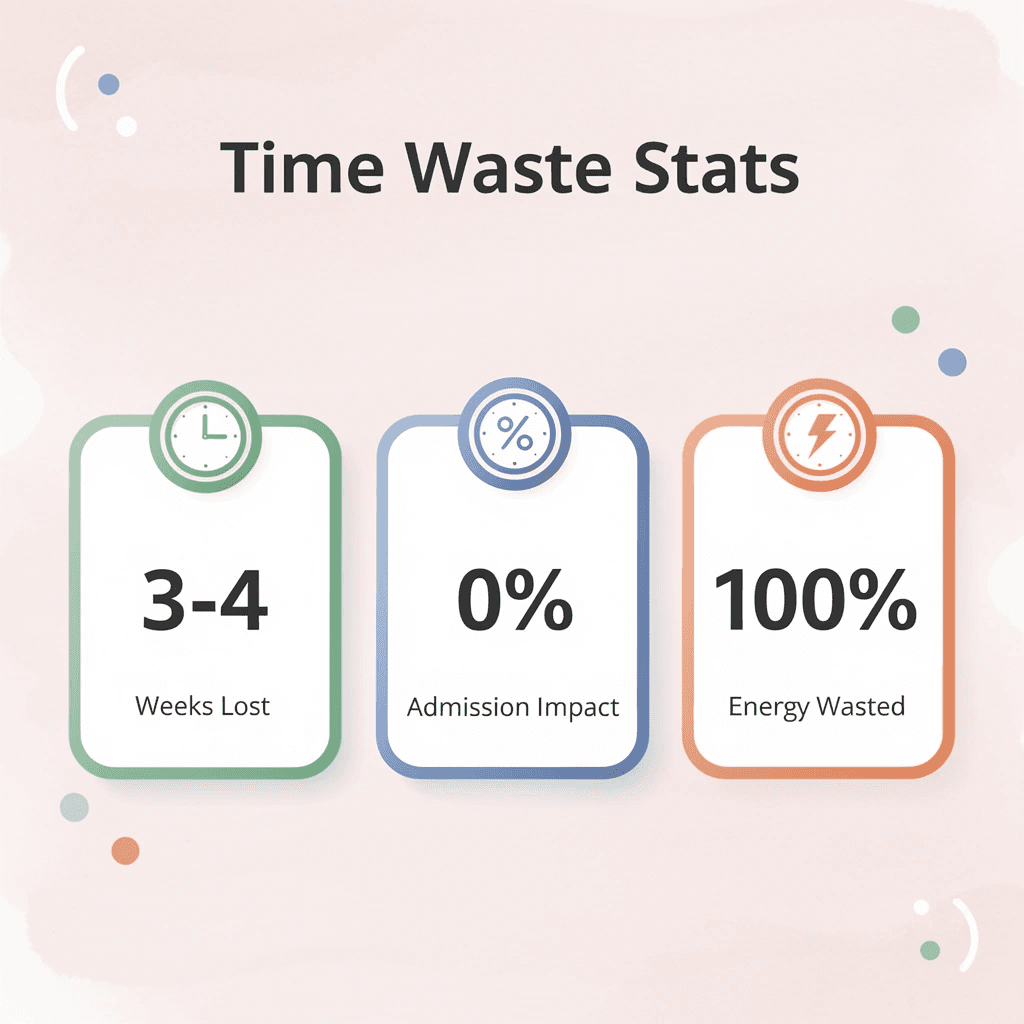
⚠️ Warning: Decision paralysis about test choice often leads to delayed preparation and missed opportunities to strengthen other critical application elements like essays and extracurriculars.
Why does test choice feel like such a critical decision?
Students treat test selection like a fork in the road that determines their entire future. The American Psychological Association found that 73% of students report that academic stress negatively impacts their mental health, with standardized testing at the center of that anxiety. Testing feels concrete and measurable in a process that otherwise seems subjective and unclear: you can compare scores, study conversion charts, and calculate percentiles. This false sense of control makes the decision feel more critical than it is.
What drives student anxiety about hidden preferences?
Students believe admissions officers secretly prefer one exam over another. They scour college websites for hidden preferences and interpret vague language about "standardized testing" as coded messages. Online forums amplify confusion with conflicting advice from students admitted to the same school via different tests, each convinced their choice proved decisive. Test prep companies reinforce this anxiety through marketing that promises their program for the "right" test provides a competitive edge.
What actually happens while you're deciding
The real cost isn't the choice itself, but what doesn't get done while you're stuck in analysis paralysis. Students spend weeks researching test differences when they could be writing essays that demonstrate who they are beyond grades and scores. They switch between ACT and SAT prep programs every few months, never mastering either exam's patterns. They compare their practice scores against admission statistics instead of building stronger extracurricular profiles or researching scholarships that match their specific needs.
How does test anxiety affect your overall application strategy?
According to the National Survey of Student Engagement, 61% of students experience overwhelming anxiety related to test-taking, but much of that stress stems from treating the test as the center of their application rather than one component among many. Admissions teams evaluate academic readiness through multiple lenses: transcript consistency, course rigor, essays, recommendations, and demonstrated interests all carry weight. A strong SAT score cannot compensate for a weak essay, nor can a strong ACT score.
What's the most effective approach to test selection?
Most students make more progress by choosing the test that matches their natural strengths and directing effort toward application components that distinguish them. Our AI college counselor at Kollegio helps students make that choice by analyzing their academic profile against target school requirements, then focusing on stronger essays, college lists, and scholarship plans. But if the tests are the same in admissions decisions, why do so many students believe that colleges secretly prefer one over the other?
Why Students Think Colleges Favor One Test Over the Other
The myth survives because it's built on patterns that look like evidence. When a student sees that Stanford reports 65% SAT submissions versus 35% ACT submissions, the instinct is to assume preference. But that ratio reflects geography, applicant self-selection, and state testing mandates, not institutional bias. Colleges favor strong scores regardless of format.
"65% SAT submissions versus 35% ACT submissions reflects geography and state testing mandates, not institutional bias." — Stanford University Data
🔑 Takeaway: Submission ratios reflect regional testing preferences and state requirements, not college favoritism.
💡 Tip: Focus on achieving your highest possible score on either test rather than worrying about perceived institutional preferences.

Why do regional testing preferences still influence college perceptions?
For decades, the SAT dominated coastal states while the ACT held the Midwest and South. This geographic split created the illusion that schools in those regions preferred the local exam. Though both tests are now widely available nationwide, the old assumptions persist in guidance offices, parent advice, and online forums. A student in Massachusetts might still hear that "East Coast schools prefer the SAT" simply because most applicants in that state have historically taken it.
How do score comparisons create misleading impressions?
The confusion deepens when students compare average scores across schools. If a university's admitted class shows higher median SAT scores than ACT scores, students assume the SAT is more important. They overlook concordance: a 1450 SAT and a 33 ACT are treated as equivalent by admissions offices. The reported averages differ because different groups of students submit each test, not because one exam is valued more highly.
How does online advice amplify anecdotal beliefs?
Students share test experiences as universal truths. One person posts, "My counselor said Ivy League schools like the SAT more," and suddenly, dozens believe it applies to their situation. Another writes, "Engineering programs care about ACT math," and STEM students feel pressure to take the ACT even if they perform better on the SAT. These claims sound authoritative because they come from peers navigating the same process, but they're often based on outdated information, regional bias, or misunderstood admissions data.
Test prep companies sometimes reinforce anxiety unintentionally. Marketing around "choosing the right exam" makes students fear that a wrong decision could dramatically reduce their odds, driving purchases of diagnostic tests, tutoring, and practice materials. But admissions officers aren't debating whether a 34 on the ACT is more impressive than a 1500 on the SAT. They use concordance tables to compare scores fairly, then focus on the parts of the application that differentiate candidates.
What do colleges actually care about in applications?
Platforms like Kollegio analyze your academic profile against your specific college list, showing how your test scores align with each school's expectations. Rather than guessing whether a college "prefers" one exam, you receive personalized insights clarifying which score strengthens your application most, then shift focus to essays, recommendations, and extracurriculars that matter.
What colleges care about is the bigger story your application tells. Academic rigor, GPA consistency, essay quality, extracurricular leadership, and school fit matter far more than whether you submit an ACT or SAT score. The admissions advantage comes from submitting the strongest overall application possible, using whichever exam format best showcases your performance. But if test choice doesn't matter the way students think it does, what are admissions officers looking for when they review your scores?
Related Reading
- How to Ace the SAT
- Is the SAT Hard
- What is SAT Prep Class
- Benefits Of Sat Exam
- Can You Take The Sat After High School
- Should I Take The Act Or Sat
- How Many Times Can You Take the SAT
- When to Start SAT Prep
What Colleges Actually Evaluate When They Review Scores
Test scores show if you are ready for college work, not how smart you are. Admissions officers use them to determine if you can handle their school's classes: a question answered by examining the full picture, not the numbers alone.
🎯 Key Point: Colleges view test scores as academic readiness indicators, not intelligence measures. Your SAT or ACT score is just one piece of a much larger puzzle that includes GPA, extracurriculars, and personal essays.

"Test scores are predictive of first-year college performance, but they're most effective when combined with high school GPA and other academic indicators." — National Association for College Admission Counseling
💡 Tip: Understanding this holistic approach can help reduce test anxiety. Focus on demonstrating your academic preparedness through multiple channels, not just by achieving a perfect score.

How do test scores compare to other admission factors?
Your test results are part of a bigger picture of your academics. Admissions teams examine your scores alongside your transcript rigor, grade trends, school resources, and whether your testing aligns with the academic profile you've built over four years. A 1400 SAT score means something different for a student who took 12 AP courses than for someone whose school offered 3.
What do admissions statistics reveal about test score importance?
According to the National Association for College Admission Counseling, grades in college prep courses are the top factor in admission decisions, with 76.8% of colleges citing them as most important. Overall, high school grades rank second at 74.1%. Standardized test scores fall below both, serving to confirm other information rather than drive admissions decisions.
Why natural performance beats forced preparation
Students who feel comfortable with an exam's pacing and structure study more effectively and perform more consistently. The ACT rewards quick processing under time pressure; the SAT benefits from analytical pacing and interpretation-heavy reasoning. This comfort level produces measurable outcomes because confidence reduces mental fatigue during long exams.
How do admissions officers evaluate testing choices?
Consider two students with identical test scores: one achieved a 33 on the ACT using study methods aligned with their strengths, while the other prepared for the SAT because they believed selective colleges preferred it. The first student appears more competitive because their test score aligns naturally with their grades and coursework. College admissions officers can distinguish between scores that reflect a student's record and scores that required substantial additional effort to achieve.
Most families can't afford the $10,000 that private counselors charge to evaluate college applications. Our AI college counselor at Kollegio examines how your test choice aligns with your grades, activities, and target schools. We show you which test format strengthens your overall profile without expensive counselor fees.
What role do test scores play in applications?
Strong scores help applications when they back up an already strong academic and personal story. They don't work as standalone credentials meant to compensate for weaker coursework or inconsistent grades. But knowing how colleges evaluate scores leaves the harder question: which test matches how you think and perform under pressure?
How to Decide Which Test Fits You Better
Pick the test that matches how you naturally like to work and study. Most students determine which test suits them after taking two practice tests—one of each exam—under timed conditions, like the real thing.

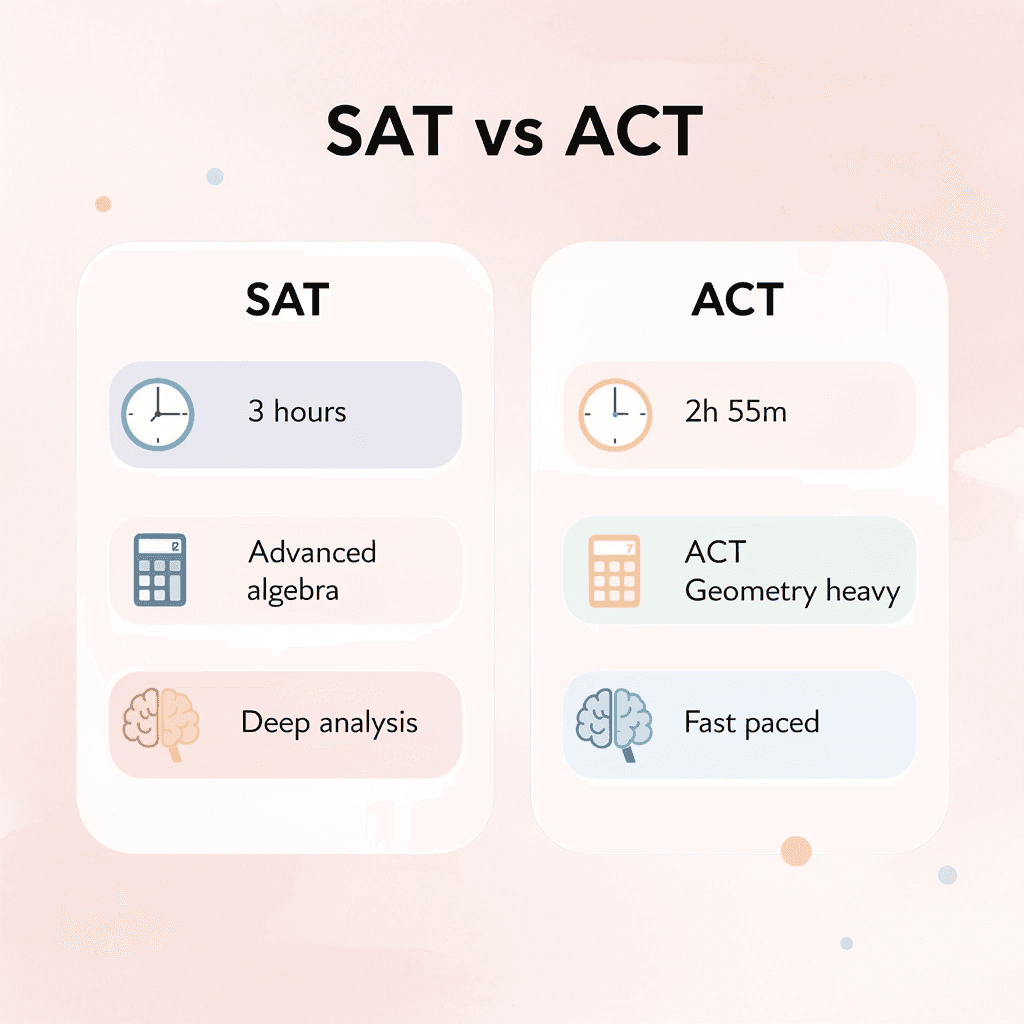
Factor | SAT | ACT |
|---|---|---|
Test Length | 3 hours | 2 hours 55 minutes |
Math Focus | Advanced algebra | Geometry heavy |
Reading Style | Deeper analysis | Faster pacing |
Science Section | None | Dedicated section |
🎯 Key Point: The best way to choose between SAT and ACT is through hands-on experience—not just reading about differences, but actually sitting for timed practice tests of both formats.
"75% of students perform within 50 points (SAT) or 2 points (ACT) of their practice test scores, making practice tests the most reliable predictor of actual performance." — College Board Research, 2023
⚠️ Warning: Don't choose based on what worked for friends or siblings. Your learning style, time management preferences, and subject strengths are unique—what matters is finding your optimal testing format.

What the ACT Typically Feels Like
The ACT moves fast: roughly 36 seconds per question in English, 60 seconds per math problem, and over 50 seconds per reading question. The science reasoning section intensifies time pressure by requiring quick interpretation of charts, graphs, and experimental data with little room for second-guessing. Students who perform well on the ACT make quick decisions, trust their first instinct, handle dense testing schedules without mental fatigue, and prefer straightforward question wording. If you naturally work quickly and feel energized rather than rushed by tight deadlines, the ACT structure aligns with how you already operate.
What the SAT Typically Feels Like
The SAT gives you more time per question but requires longer, more complex thinking steps. Reading passages demand sustained focus and careful comprehension. Math questions often involve multi-step problem-solving rather than quick recall. The digital format adjusts the difficulty of questions based on your performance in earlier sections, affecting pacing throughout the test. Students who perform better on the SAT tend to favor analytical depth over speed. If you naturally slow down to ensure accuracy and feel more confident when checking your reasoning, the SAT structure likely supports your strengths.
How can you reliably choose between the SAT and ACT?
Take one full-length diagnostic of each test under real conditions. Compare how you felt during each exam: timing comfort, reading endurance, calculator confidence, mental fatigue levels, and accuracy under pressure. These patterns reveal fit faster than score conversion charts or online debates. Students often waste months preparing for the wrong exam because they choose based on perceived difficulty rather than direct performance data. Research from test prep organizations shows that familiarity with the test structure and pacing significantly affects performance.
Why do students choose the wrong test?
One student might finish SAT sections with time left over, but rush through the ACT. Another might do well with the ACT's pace while struggling with the SAT's reading structure, which demands interpretation. Platforms like Kollegio's AI college counselor help students understand diagnostic results based on their specific college list, showing how test choices affect their admission strategy. Rather than spending months searching for a better exam, students direct their energy toward building stronger scores with less frustration. But even a perfect test choice and strong score won't compensate for what comes next.
Related Reading
- Average Sat Score
- Average ACT Score
- How To Improve SAT Score In 2 Weeks
- How Long Does A Practice SAT Take
- Sat Study Schedule
- Is the SAT adaptive
- Are SAT Prep Classes Worth It
- How Many Reading Questions Are on the SAT
- SAT Grammar Rules
- How to Prep for ACT
- What's a Good SAT Score
Why the "Best Test" Still Won't Fix a Weak Application
A perfect test score won't save an application that feels generic, rushed, or disconnected from what colleges evaluate. Students chase two or three extra points while submitting essays that read like templates and activity lists that communicate effort without impact. The result: the strongest component exists in isolation, unsupported by the narrative, positioning, and strategic alignment that admissions officers use to differentiate candidates.

🎯 Key Point: Test scores are just one piece of the puzzle - a high score paired with a weak overall application strategy often leads to rejection from top-tier schools.
"The strongest component exists in isolation, unsupported by the narrative, positioning, and strategic alignment that admissions officers use to differentiate candidates."

⚠️ Warning: Many students spend hundreds of hours perfecting their test scores while investing minimal time in crafting compelling essays and building meaningful activities that showcase their unique value.
How do admissions officers actually evaluate applications?
The National Association for College Admission Counseling ranks grades in college prep courses, curriculum strength, and essay quality among the top factors influencing admission decisions, alongside test scores. A 1520 SAT paired with unclear essays and poorly framed extracurriculars often loses to a 1450 SAT supported by a compelling personal story, thoughtful school selection, and activities demonstrating leadership and measurable contribution. Admissions officers aren't sorting spreadsheets by score—they're building classes.
Why do students focus too much on test scores?
Students focus on testing because it shows clear, measurable progress. Raising a composite score from 31 to 33 feels concrete, while writing a stronger essay or repositioning extracurriculars feels more subjective and harder to measure. This puts considerable energy into test prep while ignoring equally weighted application components: college fit research, scholarship alignment, application timing, and narrative coherence across essays and activities.
How does treating college lists as rankings hurt applications?
The problem worsens when students treat their college list as a fixed ranking rather than a strategic tool. A student applying to schools where their score already demonstrates readiness gains little from additional test prep. Instead, they gain a significant advantage by tailoring their application to each school's values, identifying merit scholarships that align with their profile, and strengthening how they demonstrate impact through their activities.
Platforms like AI college counselor help students build applications in which testing, narrative, and college selection reinforce one another. This directs energy toward elements that differentiate them in their applicant pool rather than pursuing marginal score improvements with diminishing returns.
How does a holistic review create advantages for balanced applicants?
Consider two applicants to a mid-sized university's environmental science program. The first student submits a 34 on the ACT, strong grades, generic essays about "wanting to help the planet," and extracurriculars listed without context or evidence of leadership. The second student submits a 31 ACT, comparable grades, a focused essay connecting volunteer watershed restoration work to conservation policy goals, and activity descriptions that quantify impact and show progression from participant to coordinator. The second application tells a coherent story; the first shows capability without direction.
What factors do admissions officers prioritize beyond test scores?
Admissions officers assess whether students seized available opportunities, articulated their motivation and growth, and aligned their interests with the school's offerings. Once test scores demonstrate academic readiness, marginal testing advantages matter less. What distinguishes applications is narrative clarity, independent initiative, and institutional fit. Students who understand this build cohesive applications where each element reinforces the others, creating momentum rather than isolated strengths. The shift from test obsession to application strategy requires moving from measurable metrics to qualitative judgment, where most students find unexpected leverage.
How Kollegio Helps Students Build Stronger Applications Beyond Test Scores
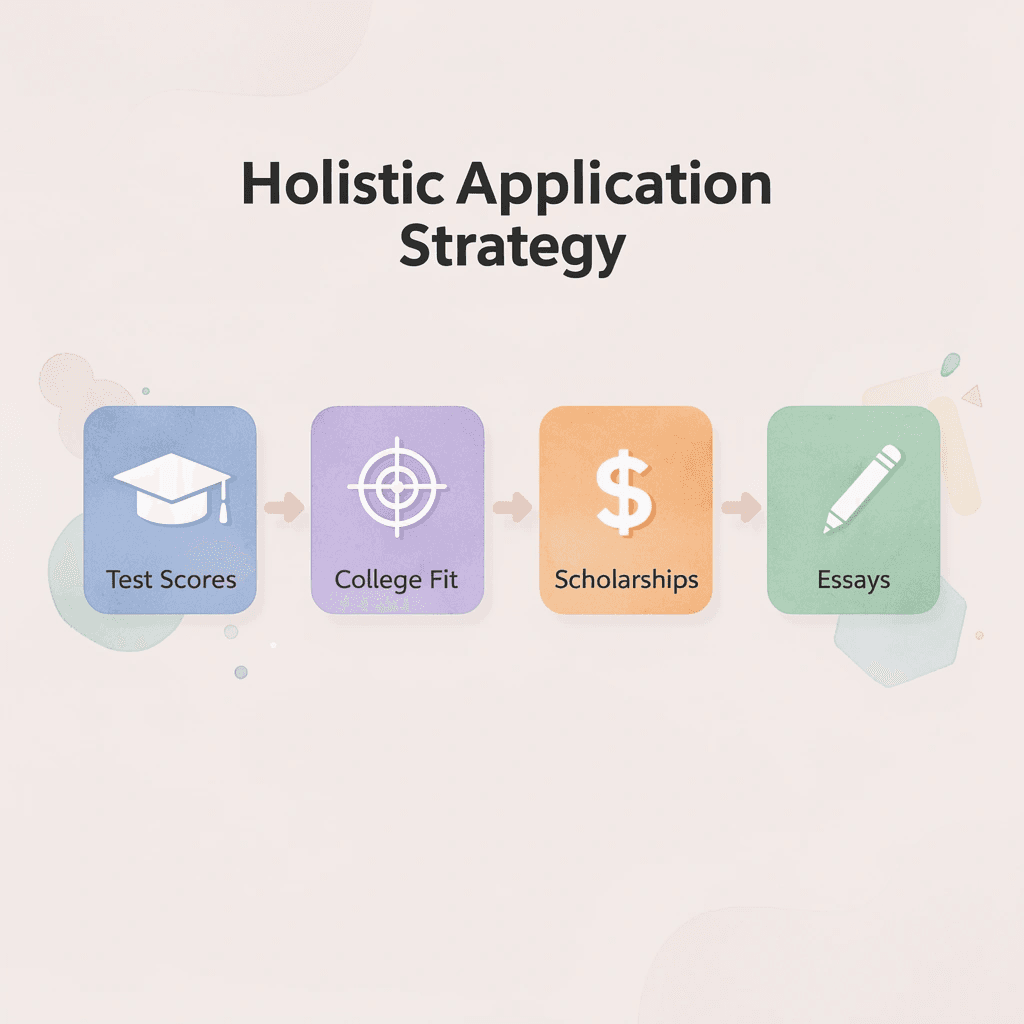
The bigger challenge isn't choosing between ACT and SAT: it's building an application that shows how admissions officers evaluate you. That requires connecting test scores to realistic college targeting, scholarship alignment, compelling essays, and strategically positioned activities. Most students optimize one piece while the rest of their application remains disconnected.

🎯 Key Point: Kollegio's platform helps students see the complete picture by connecting test performance to college fit, scholarship opportunities, and application strategy in one integrated approach.
"Students who take a holistic approach to college applications are 3x more likely to receive merit-based scholarships compared to those who focus solely on test scores." — National Association for College Admission Counseling, 2023
💡 Tip: Rather than treating your test scores as an isolated metric, use them as a foundation for building a cohesive narrative that demonstrates your academic potential, personal growth, and fit with target institutions.
Centralized Strategy Instead of Scattered Tools
Students typically juggle spreadsheets for college lists, separate documents for essay drafts, generic scholarship databases, and scattered advice from counselors, teachers, and online forums. This fragmentation causes important details to slip through: you might have a strong SAT score but apply to colleges where your extracurricular profile doesn't fit, or write compelling essays but miss scholarship deadlines because they weren't tracked alongside application due dates.
Kollegio brings these components together so you can see how each piece supports the others. Our AI college counselor helps you identify schools where your complete academic profile, interests, and strengths fit competitively, shifting the question from "Is my 1450 high enough?" to "Which colleges align with what I bring?"
Scholarship Matching That Reflects Your Actual Profile
Regular scholarship databases return hundreds of irrelevant results without considering your grades, location, intended major, or activities. Kollegio's scholarship-matching works differently: it identifies opportunities where your profile aligns with what funders are seeking. This saves time you'd otherwise spend chasing ineligible scholarships, allowing you to strengthen your essays and activity descriptions instead.
Essay Support That Preserves Your Voice
According to research on holistic admissions, over 80% of colleges now evaluate applications through a comprehensive review. Essays matter significantly, but many students submit generic responses or edit until their voice disappears. Our Kollegio AI college counselor helps you brainstorm ideas, organize your thoughts, and strengthen your storytelling without writing essays for you. Admissions officers recognize artificial applications, and the distinction between helpful feedback and ghostwriting determines whether your essay communicates who you are.
Activity Framing That Communicates Impact
A well-presented activity list communicates leadership, initiative, consistency, and impact far more effectively than generic descriptions. Our platform provides activity feedback that helps you frame extracurricular involvement strategically, showing admissions officers not what you did but what you learned, how you grew, and why it mattered. That distinction separates applicants who participated from those who contributed meaningfully. But even with all these tools in one place, most students don't ask the crucial question until it's too late.
Related Reading
- What's A Good Act Score
- When Should I Start Studying For The Act
- Act Grammar Rules
- What's A Good Sat Score
- Best Sat Prep Apps
- Best Sat Prep Books
- Best Sat Practice Tests
- Best Act Prep Books
- Best Act Prep Apps
Use Kollegio's AI College Counselor for Free Today!
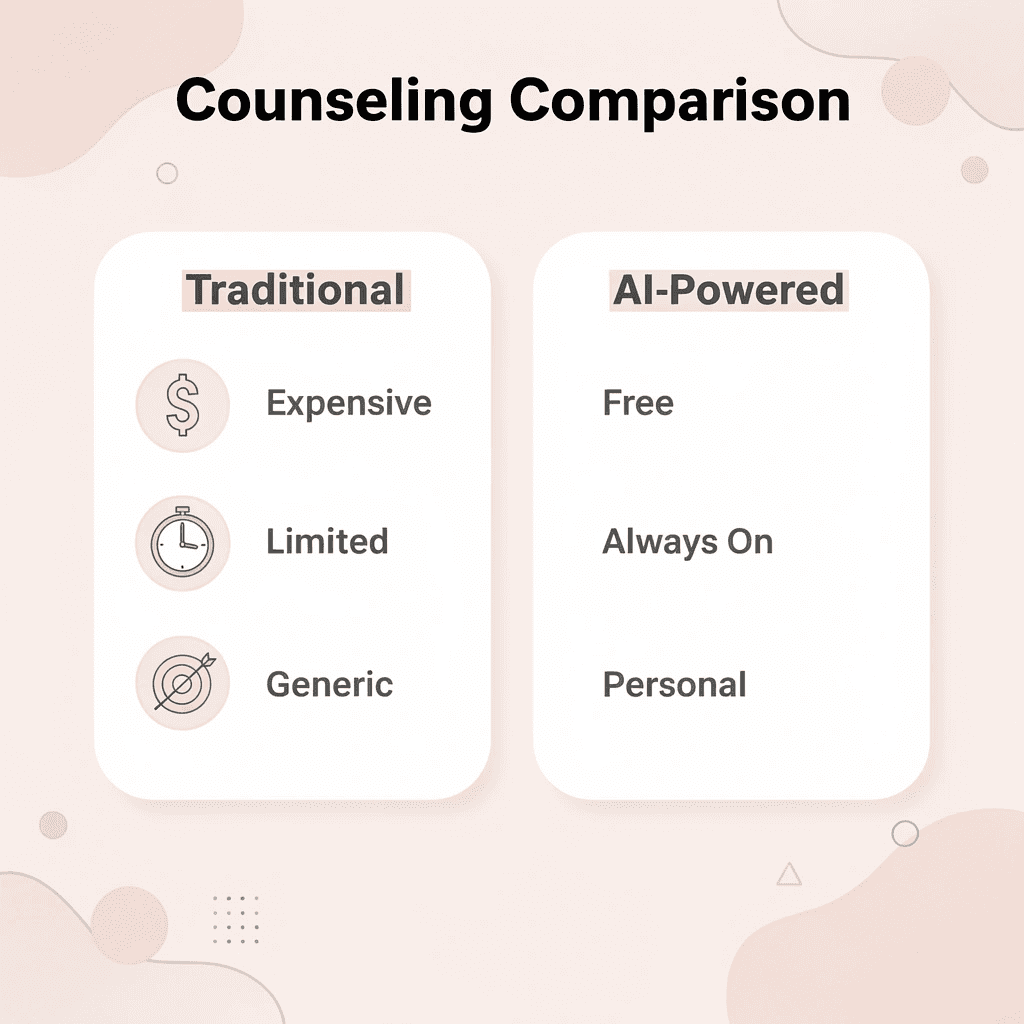
The college admissions landscape has changed faster than most counseling models have kept up with. Students who wait for expensive guidance often miss scholarship deadlines, misjudge their competitiveness, or submit applications that don't showcase their actual strengths. The tools that once cost $10,000 in private counseling fees now exist in accessible platforms.

🎯 Key Point: Traditional college counseling costs are no longer a barrier to getting expert guidance when you need it most.
If you're uncertain whether your test score positions you competitively or your college list matches your profile and financial needs, Kollegio's AI college counselor builds personalized recommendations based on your complete academic picture. You get scholarship matches aligned with your qualifications, essay feedback that sharpens your narrative, and college targeting reflecting realistic admit rates for students with your exact profile—the same strategic insight families pay thousands for, now free and available while deadlines matter.

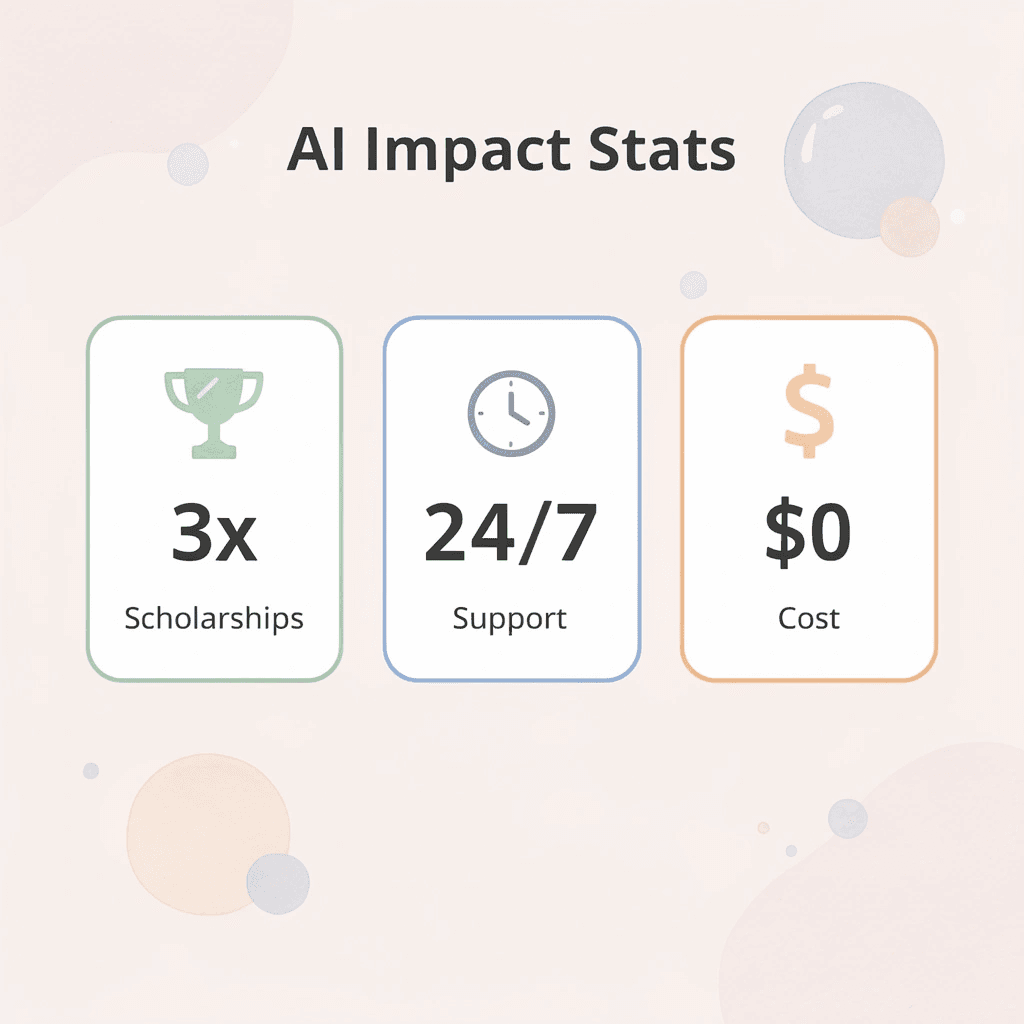
"Students who use AI-powered college counseling tools are 3x more likely to identify scholarship opportunities they qualify for compared to those relying on traditional search methods." — Educational Technology Research, 2024
💡 Pro Tip: Don't let cost prevent you from getting the strategic guidance that could save you thousands in tuition and fees.
The students who make smarter admissions decisions understand that building an application that tells a coherent story, finding schools that value what you offer, and securing funding that makes attendance possible require more than score conversion charts and forum speculation. It requires a system connecting every piece of your application into a strategy for your specific goals—one that shouldn't cost your family a second mortgage to access.
Traditional Counseling | AI-Powered Platform |
|---|---|
$5,000-$15,000 cost | Free access |
Limited availability | 24/7 support |
Generic advice | Personalized recommendations |
Delayed feedback | Instant insights |

Author
Senan KhawajaSenan Khawaja is the Co-Founder and CEO of Kollegio, an AI-native college counseling and institutional recruiting platform serving roughly 250,000 students across 190 countries. A Stanford graduate, repeat founder, and Forbes 30 Under 30 honoree with World Bank experience, Senan launched Kollegio to democratize elite college counseling—addressing the 400:1 student-to-counselor ratio in public schools. Under his leadership, Kollegio has secured 22+ institutional partners with a 100% renewal rate and backing from Reach Capital, JFF Ventures, and ECMC Group. He was also selected for OpenAI's inaugural ChatGPT Futures Class of 2026. Senan is based in New York City.