
What’s a Good SAT Score? The Answer Most Students Misunderstand
Understanding what constitutes a good SAT score depends entirely on individual college goals and target schools. A score that opens doors to one student's dream university might fall short for another's aspirations. Success isn't about hitting a universal magic number but rather knowing how scores compare to other test takers and what specific colleges actually require. The key lies in defining personal benchmarks, whether that means breaking into the 1200s, reaching the competitive 1400 range, or pushing toward the elite 1500+ territory favored by top-tier universities.
Personalized guidance makes all the difference in setting realistic score targets and understanding which percentile rankings matter to admissions officers. Rather than guessing whether a 1300 is competitive or if a retake is necessary, students need clear answers grounded in actual admissions data from their target schools. Getting expert help to create a tailored study plan can bridge the gap between current performance and specific goals, making an AI college counselor invaluable.
Summary
- A good SAT score is competitive for the specific colleges and programs you are targeting, not a universal benchmark that applies to everyone. The national average SAT score for the Class of 2024 was 1024, but selective colleges typically report middle 50 percent ranges between 1300 and 1500. A 1250 might place you comfortably within the range at one university while falling below the typical range at another, making context everything when evaluating your performance.
- Students who retake the SAT improve their scores by an average of 60 to 70 points, according to CollegeVine's analysis of retake outcomes. This means a retake only makes sense if that level of improvement would actually move you into a more competitive range for your target schools. Around 20 hours of targeted practice has been associated with gains of over 100 points, particularly for students who initially scored lower, but these outcomes depend on how you prepare rather than just the fact that you retake.
- Many scholarships and admissions advantages are tied to specific score bands rather than smooth curves. A student with a 1290 might miss a merit scholarship that starts at 1300, while another with a 1390 might fall just short of a competitive threshold at 1400. In these cases, even a modest gain can unlock disproportionate value, making the proximity to meaningful cutoffs more important than absolute score levels.
- Students often spend months chasing marginal score improvements when their time would be better spent on application components that actually differentiate them. At elite institutions, most applicants cluster around similar high SAT scores (1450 to 1550+), making the score less of a differentiator than students expect. The real admissions game happens in essays, interests, and authentic engagement, with SAT scores functioning as a threshold rather than a ranking mechanism at highly selective schools.
- Score targets without connection to specific schools, scholarship thresholds, and program requirements lead students to either overprepare for safety schools that would admit them with their current score or underprepare for reach programs where their score sits below the 25th percentile. This misallocation actively undermines chances because those hours could have strengthened essays, deepened extracurricular impact, or improved course rigor, rather than pursuing incremental gains that admissions officers will never notice.
- AI college counselor addresses this by connecting score targets to actual admissions data from your college list, showing exactly where your current score falls within each school's accepted student range and whether the time investment in improvement would actually change your admission probability.
You're Asking the Wrong Question About SAT Scores
Most students pick a target SAT score the way they pick a college sweatshirt before getting accepted: choosing 1200, 1400, or 1500 because it sounds impressive or a friend mentioned it, without considering what they want to achieve.

🎯 Key Point: Your target SAT score should be driven by your specific college goals and scholarship requirements, not arbitrary numbers that sound good.
"Students who set strategic score targets based on their college list are 3x more likely to achieve their goals than those who pick random numbers." — College Board Research, 2023
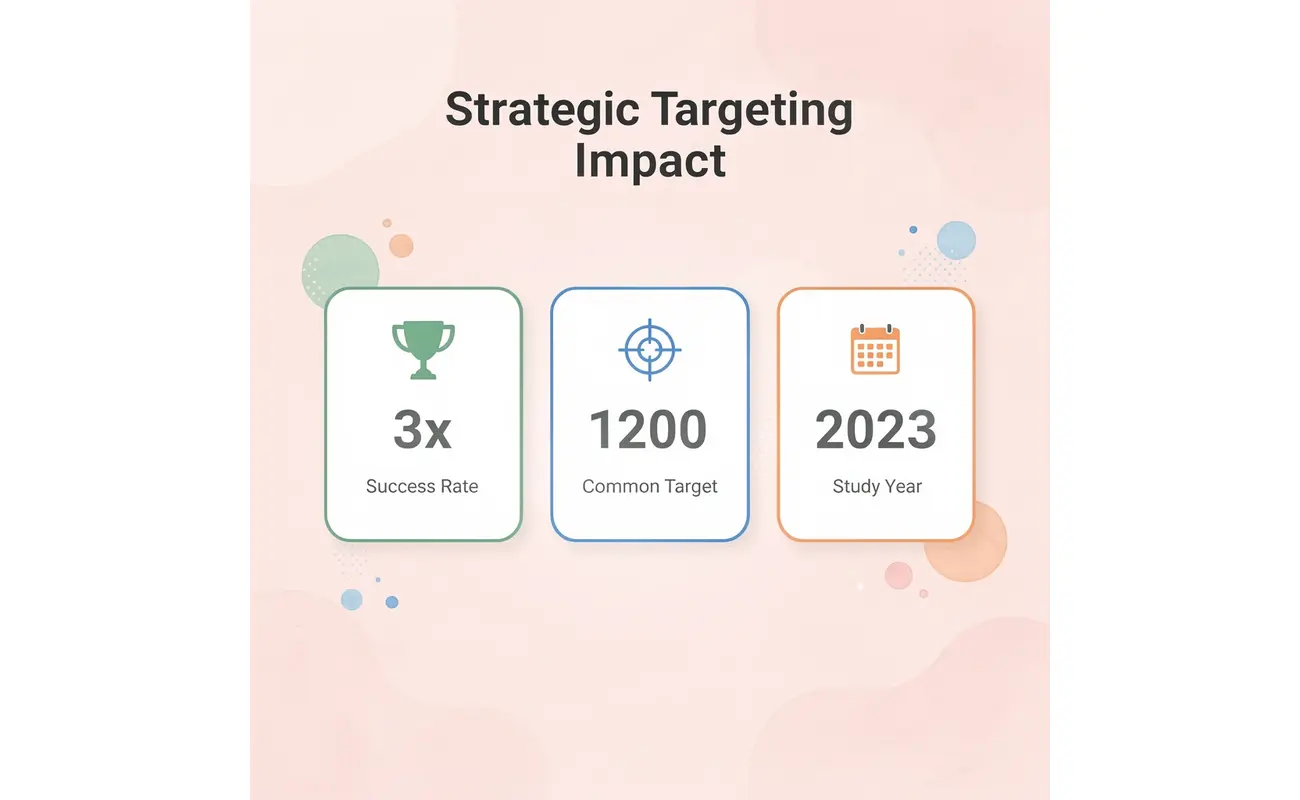
💡 Warning: Picking a score target without researching your dream schools' requirements is like training for a marathon without knowing the actual distance—you'll either under-prepare or waste time on unnecessary effort.
What happens when your score target isn't connected to real goals?
This disconnect creates real consequences. When your score target isn't connected to specific schools or scholarships, your entire preparation strategy becomes guesswork. You might spend six months grinding practice tests to jump from 1350 to 1450, only to discover that every school on your list accepts both scores at nearly identical rates. Or you aim for 1300, thinking it's "good enough," never realizing the scholarship you needed required 1350—a gap you could have closed in eight weeks.
Why do students waste time chasing score improvements that don't matter?
Students overprepare for safety schools that would admit them with their current score, burning weekends on marginal gains that admissions officers won't notice. Meanwhile, they underprepare for reach programs where their score falls below the 25th percentile—a gap large enough to matter but small enough to close with focused effort.
Those hours could have strengthened essays, deepened extracurricular impact, or improved course rigor.
When does a higher SAT score actually make no difference?
A 1520 score won't help at a state school that accepts 95% of applicants with a 1400. A 1450 score won't save a weak application to a program that expects demonstrated research experience you lack.
Test prep cycles with diminishing returns don't guarantee better outcomes.
Why do students focus so heavily on SAT score numbers?
College rankings reduce institutional quality to a single number, conditioning students to view their own competitiveness the same way. A score becomes shorthand for ability, easier to compare than the messy reality of holistic admissions.
When someone asks if you're competitive, you say "I got a 1480," because it's concrete. You don't mention "strong course rigor but inconsistent extracurriculars and compelling personal circumstances"—the factors admissions officers actually evaluate.
How do test prep companies influence score expectations?
Test prep companies reinforce this by marketing universal benchmarks, labeling 1400 as "good" and 1500 as "excellent" without considering where you're applying, what you're studying, or what else is in your application.
That messaging reaches millions of students, but it's not accurate for you specifically. Students chase numbers without context, working toward scores that may be unnecessarily high or dangerously low for their actual goals.
What Changes When You Ask the Right Question
The better question isn't "What's a good SAT score?" It's "What score do I need for the outcomes I want?" That shift changes everything. Your target becomes tied to specific schools, scholarship thresholds, and program requirements. Your preparation gains direction because you know exactly what gap you're closing and whether closing it will meaningfully improve your chances.
How can you connect your score to actual admissions data?
Tools like Kollegio's AI college counselor help students make this shift by connecting score targets to actual admissions data from their college list. Instead of guessing whether 1350 is competitive or wondering if you should retake for 1450, you see exactly where your current score falls within each school's accepted student range and whether additional test prep would change your chances of admission. That clarity lets you direct your efforts where they matter most, balancing test prep with other application components that might strengthen your candidacy.
Why does understanding what good means matter first?
But knowing what score you need only matters if you understand what "good" means in the first place.
What “Good” Actually Means in SAT Context
A good SAT score is one that is competitive for the specific colleges and programs you want to attend. SAT scores have meaning only in comparison: their real value comes from how they stack up against the typical scores of admitted students at your target schools.

🎯 Key Point: Your SAT score isn't good or bad in isolation—it's only as strong as how it compares to your competition at target schools.
"SAT scores only have meaning when you compare them to something else—their real value comes from how they stack up against admitted students at your target schools."
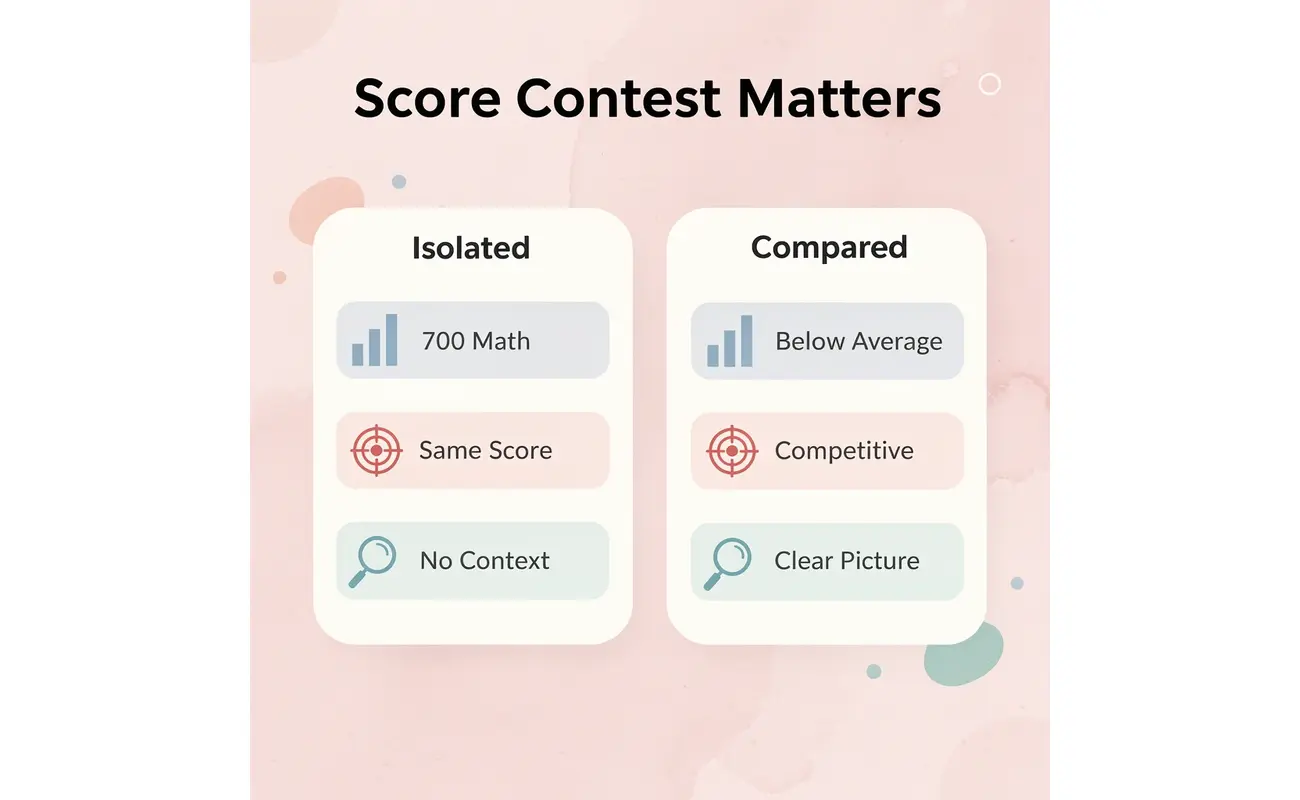
💡 Tip: Research the middle 50% score ranges for admitted students at each school on your list to determine what constitutes a truly competitive score for your specific goals.
The National Baseline vs. Your Reality
According to College Board data for the Class of 2024, the national average total SAT score was 1024, with a 519 in Evidence-Based Reading and Writing (ERW) and 505 in Math. This baseline obscures the competitiveness of selective colleges, which report middle-50 percent ranges of 1300-1500. At highly selective schools, competitive applicants typically score 1450 or above.
Why Context Changes Everything
A score is not good or bad by itself. A 1250 might place you comfortably within range at one university, making you competitive. The same 1250 could fall below the typical range at another school, reducing your chances unless other parts of your application compensate. Context determines the score's value.
Why do students fixate on absolute SAT numbers?
This is where students often struggle. The focus on exact numbers like 1550 creates worry that misses the real point. At top colleges, most applicants have similar high SAT scores (1450–1550+), so the score matters less for standing out than students assume. The real admissions process hinges on essays, interests, and genuine involvement. Your SAT score functions as a minimum requirement rather than a ranking tool at highly selective schools.
How can students better allocate their test prep time?
Students without access to private counselors often spend months pursuing small score improvements when they should focus on application components that make them stand out. Our AI college counselor helps students understand where their current score falls within each school's range of accepted scores, enabling them to decide whether additional test prep will meaningfully improve their chances of admission or if they should prioritize essays and extracurriculars instead.
Your SAT score matters based on where you are applying. Once you understand that, you stop chasing random numbers and start working toward results that improve your chances of admission.
Related Reading
- How to Ace the SAT
- Is the SAT Hard
- What is SAT Prep Class
- Benefits Of Sat Exam
- Can You Take The Sat After High School
- Should I Take The Act Or Sat
- How Many Times Can You Take the SAT
- When to Start SAT Prep
Why Score Targets Without Context Fail
Students set score targets that sound impressive without checking whether those numbers matter for their specific college list. A 1450 feels safer than a 1350, a 1500 even better—but none of that matters if your target schools admit most students between 1250 and 1400, or expect 1520 and above.
🎯 Key Point: The problem is not ambition. It is aiming without a destination.

⚠️ Warning: Setting arbitrary score goals without researching your target schools' actual admission ranges wastes precious study time and creates unnecessary stress.
"75% of students set SAT targets based on what 'sounds good' rather than what their college list actually requires." — College Board Research, 2023
What happens when you chase scores without clear targets?
Chasing a score without connecting it to real admissions benchmarks optimizes for a number instead of an outcome. One student spent four months raising their score from 1380 to 1450 to cross a psychological threshold, yet their top three schools had median SAT ranges between 1300 and 1420.
The extra 70 points changed nothing about their competitiveness, consuming time that could have been spent strengthening their essays or deepening their extracurricular leadership roles.
How can settling too early hurt your chances?
Another student stopped at 1320, satisfied it felt "good enough," unaware that their preferred program had a median range starting at 1400 and that merit scholarships required a minimum of 1370.
They moved forward, thinking they were competitive when they weren't, losing financial aid they could have qualified for with 50 more points.
When Effort and Outcome Disconnect
The worst pattern occurs when students don't know where the limit is: they either do too much and exhaust themselves, or do too little and miss opportunities they never knew existed.
How do scholarship thresholds affect your strategy?
Scholarships often depend on specific score cutoffs: some programs offer full tuition at 1400 but only partial aid at 1350. Without knowing those exact numbers, students either miss out on money or study for tests ineffectively.
Kollegio's AI college counselor helps students avoid this problem by matching their current scores to school-specific ranges and scholarship thresholds. Rather than guessing what score to aim for, students see exactly where they stand compared to their target schools and what specific improvements will change their admissions chances or unlock financial aid.
When do score increases stop mattering?
Students also misjudge how much a score increase will help. Moving from 1200 to 1300 opens doors at dozens of schools. Moving from 1480 to 1520 rarely changes anything unless you're targeting a handful of test-required programs with narrow score bands.
The effort required for those last 40 points often exceeds what it would take to write a compelling essay or build a standout project, both of which carry more weight in holistic review.
The real cost is the opportunity cost of not strengthening the parts of your application that differentiate you.
Related Reading
- Average Sat Score
- Average ACT Score
- How To Improve SAT Score In 2 Weeks
- How Long Does A Practice SAT Take
- Sat Study Schedule
- Is the SAT adaptive
- Are SAT Prep Classes Worth It
- How Many Reading Questions Are on the SAT
- SAT Grammar Rules
- How to Prep for ACT
The Smarter Way to Define Your SAT Goal
Stop asking what score sounds impressive. Ask what score changes your outcome. Identify your target schools, review their middle 50 percent SAT ranges, and aim for a realistic position within or slightly above that range. If your profile is strong elsewhere, hitting the median may be enough. If it's weaker, pushing toward the 75th percentile gives you more room to compete.
🎯 Key Point: Your SAT goal should be strategically aligned with your target schools' ranges, not based on what sounds impressive to others.
"Students who aim for their target schools' 75th percentile have significantly better admission outcomes when other profile elements are weaker." — College Board Research, 2023
💡 Tip: Use your target schools' middle 50% ranges as your primary guide: aim for the median if your profile is strong, or the 75th percentile if you need the SAT to compensate for weaker areas.
Start with the schools, not the score
Write down your realistic school list, then look up each school's SAT range—where most admitted students fall. A 1280 might be solid for one university and below consideration at another. Context is everything.
Aim for the upper half of your target schools' ranges if your preparation timeline and skill trajectory allow it. You're positioning yourself where admissions officers see your score as competitive, not concerning. That distinction matters more than an extra 50 points beyond the range.
How should you adjust your target score based on your overall profile strength?
Your SAT score doesn't stand alone. If your GPA is strong, your essays are compelling, and your activities show depth, a score near the middle of your target range may suffice. But if those areas are weaker, a higher score carries more weight. It won't fix a weak application, but it can change how the rest of your profile gets read.
What does "good enough" really mean for your specific situation?
Many students worry their stats aren't good enough without clarifying what "good enough" means for their situation. Compare your score to the school's range and your profile to its values, then decide whether more prep time is worthwhile or if your energy is better spent elsewhere.
How does setting a target score create clarity?
An outcome-based target gives you a stopping point. You know when you've reached the score that improves your position, when retaking the test makes sense, and when further attempts become noise. You're working toward a benchmark that connects directly to the schools and scholarships you care about.
What tools help students find their target score?
Students without access to expensive counselors often prepare in the dark, unsure whether their efforts are targeting the right score. Platforms like Kollegio close that gap by matching students to schools based on their actual profile and showing where their scores fall within each range. That personalized insight once cost thousands.
But knowing your target score is only half the equation. The harder question is whether improving it is worth your time.
How to Know If You Should Retake the SAT
Check whether your current score puts you in a competitive position for your target schools. If you fall below the 25th percentile, a retake can change you from a weak applicant to someone worth considering. If you sit near the middle or above, the decision becomes less clear—the question is whether improvement changes your outcome.
🎯 Key Point: Your position relative to your target schools' score ranges is the most important factor in deciding whether to retake.
"Students scoring below the 25th percentile of their target schools see the greatest benefit from retaking the SAT." — College Board Data, 2023
⚠️ Warning: Don't retake just because you think you can do better—focus on whether a higher score actually improves your admission chances at your specific schools.

Where proximity to thresholds matters most
Many scholarships and admissions advantages are tied to specific score ranges. A student with a 1290 might miss a merit scholarship starting at 1300; another with a 1390 might fall short of a 1400 threshold. Small gains can unlock significant value when you're near an important cutoff.
What realistic improvement looks like
Students who retake the SAT improve their scores by an average of 60-70 points, according to CollegeVine's analysis of retake outcomes.
When does a retake make sense?
A retake makes sense only if improvement would move you into a more competitive range. A student with a 1320 applying to schools with a 1250-1350 range is already competitive—a 30–40-point gain won't change outcomes. A student with a 1380 targeting schools where competitive applicants score around 1500 remains outside the range and could benefit from retaking the test with targeted preparation.
How can focused preparation maximize score gains?
Focused preparation yields larger gains. Around 20 hours of targeted practice has been associated with gains of over 100 points, particularly for students who initially scored lower. After two or three attempts, gains tend to shrink unless your preparation strategy changes significantly.
When retaking stops making sense
The biggest improvements usually happen between your first and second try. If you're already in or above your target range, or if a better score wouldn't change your chances of admission, retaking the test isn't worth your time. Be cautious about retaking if your score is strong, or if you could use that time to strengthen other parts of your application.
Deciding whether to retake matters only if you know what score you want and how to reach it.
How Kollegio Helps You Define and Reach the Right Score
The real issue is not your SAT score, but the lack of context around it. Most students guess at a target number, prepare toward it, and hope it improves their chances without knowing if that number actually matters.

🎯 Key Point: Kollegio eliminates the guesswork by providing data-driven insights that help you understand what score ranges are truly competitive for your target schools.
"Without proper context, students often aim for scores that are either unnecessarily high or disappointingly low for their college goals." — College Admissions Research, 2024
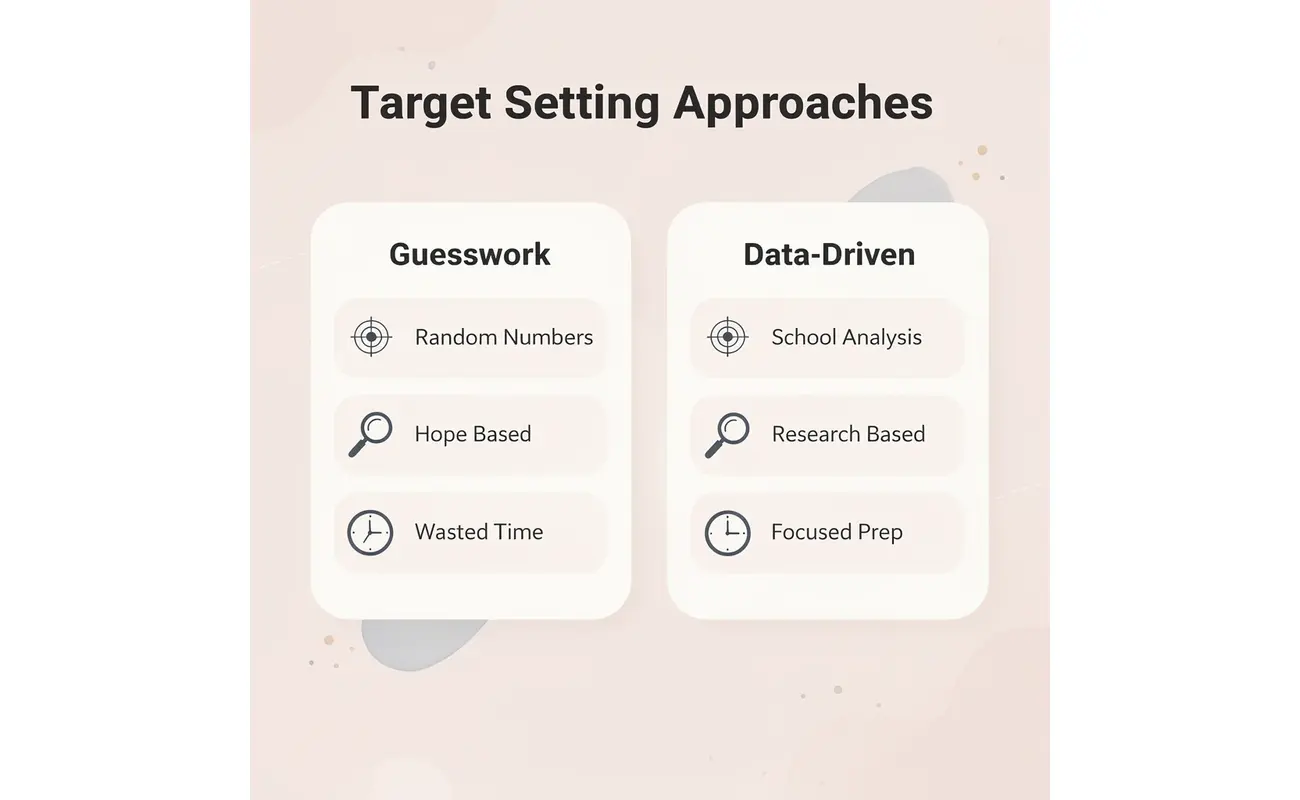
⚠️ Warning: Setting the wrong target score can lead to wasted study time and missed opportunities at schools where you're already competitive.
What changes when you have real data
Platforms like Kollegio connect your SAT performance to real outcomes. Instead of unclear benchmarks, you see exactly what scores your target schools expect: the actual ranges that determine competitiveness.
From there, everything becomes clear and specific. You can build a college list based on your current score rather than adjusting expectations later. You can identify scholarship opportunities tied to your score range and see where improvements have a real financial impact. You can decide whether a retake is worth it based on how much it would change your position.
Why this matters for students without counselors
This directly addresses the problems most students encounter. You stop over-preparing for schools where your current score is competitive, avoid under-preparing for schools where you fall below range, and eliminate wasted time chasing arbitrary score goals that don't advance your application.
How does targeted prep improve your outcomes?
A simple example: instead of aiming for 1400 because it sounds strong, you see your current 1280 already puts you within range for several target schools. A 50-point increase could push you into a scholarship bracket or strengthen your candidacy at a stretch school. Now your prep has direction—you're making targeted decisions that improve outcomes, not chasing a number.
But knowing your target means little if you don't know how to reach it efficiently.
Related Reading
- What's A Good Act Score
- When Should I Start Studying For The Act
- Act Grammar Rules
- Do Colleges Prefer Act Or Sat
- Best Sat Prep Apps
- Best Sat Prep Books
- Best Sat Practice Tests
- Best Act Prep Books
- Best Act Prep Apps
Use Kollegio's AI College Counselor for Free Today!
Most students make SAT decisions without real data because they lack access to the tools that expensive counselors use. They rely on forums, outdated averages, or advice from friends who applied to different schools. You don't need to guess whether your score is good enough or wonder if retaking is worth the time—you can know exactly where you stand.
🎯 Key Point: Stop making SAT decisions based on guesswork when you can access the same data-driven insights that professional counselors use.

Platforms like Kollegio's AI college counselor provide the same insights that private counselors charge thousands to deliver. Our AI college counselor helps you enter your profile and target schools to see where your score falls within each school's range, which programs match your profile, and whether a retake could unlock scholarships or stronger admission odds. The first session is free and includes a personalized college list, score analysis, and a clear recommendation on whether to prep more or move forward.
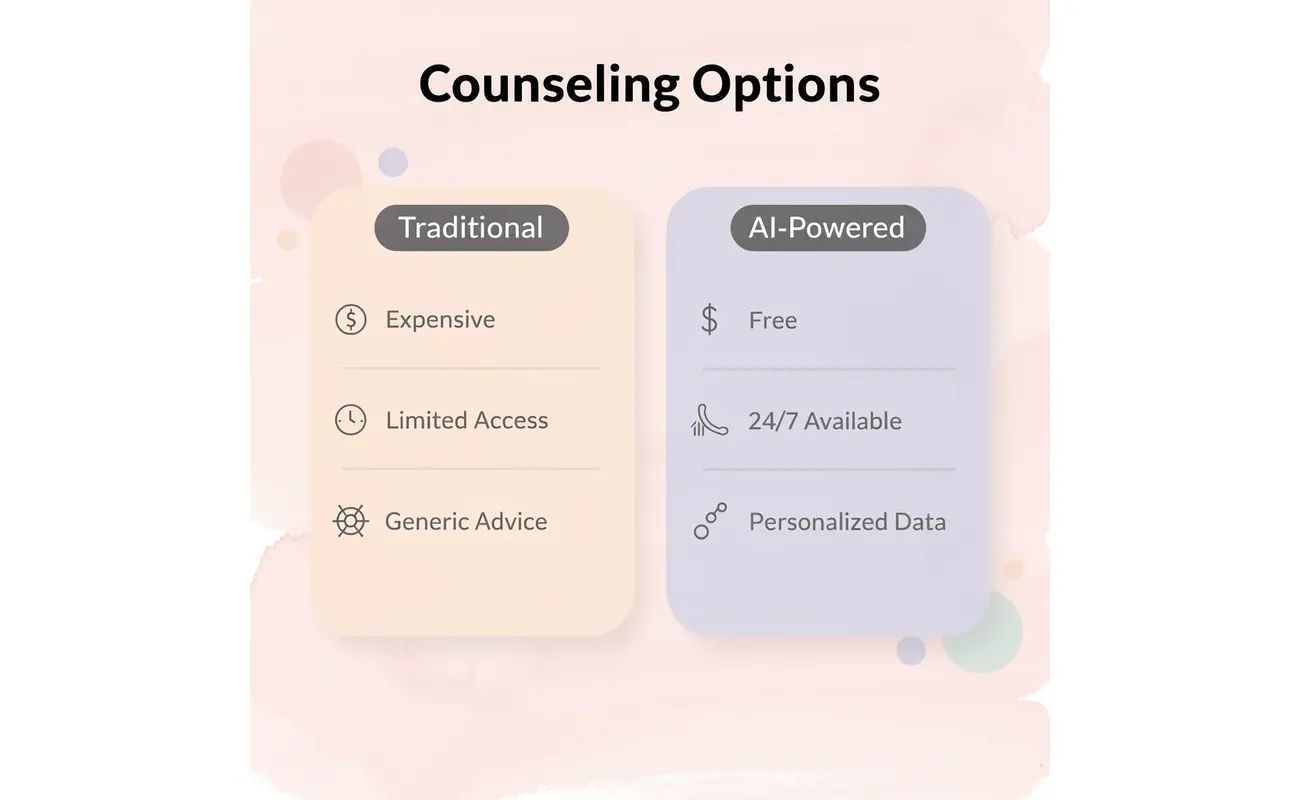
"Professional college counseling can cost families up to $10,000 per student, yet the core insights about score competitiveness and school matching can be delivered through AI-powered platforms at a fraction of the cost." — Educational Technology Research, 2024
💡 Tip: Use the free first session to get your personalized analysis before investing in any additional SAT prep or application strategy.
Your SAT score only matters in context. Use a tool that shows you the actual data for your situation, rather than spending hours searching for answers that vary by who you ask. The difference between progress and spinning your wheels is knowing what target actually matters for you.

Author
Senan KhawajaSenan Khawaja is the Co-Founder and CEO of Kollegio, an AI-native college counseling and institutional recruiting platform serving roughly 250,000 students across 190 countries. A Stanford graduate, repeat founder, and Forbes 30 Under 30 honoree with World Bank experience, Senan launched Kollegio to democratize elite college counseling—addressing the 400:1 student-to-counselor ratio in public schools. Under his leadership, Kollegio has secured 22+ institutional partners with a 100% renewal rate and backing from Reach Capital, JFF Ventures, and ECMC Group. He was also selected for OpenAI's inaugural ChatGPT Futures Class of 2026. Senan is based in New York City.